
 English
 русский
 Français
 Español
 Português
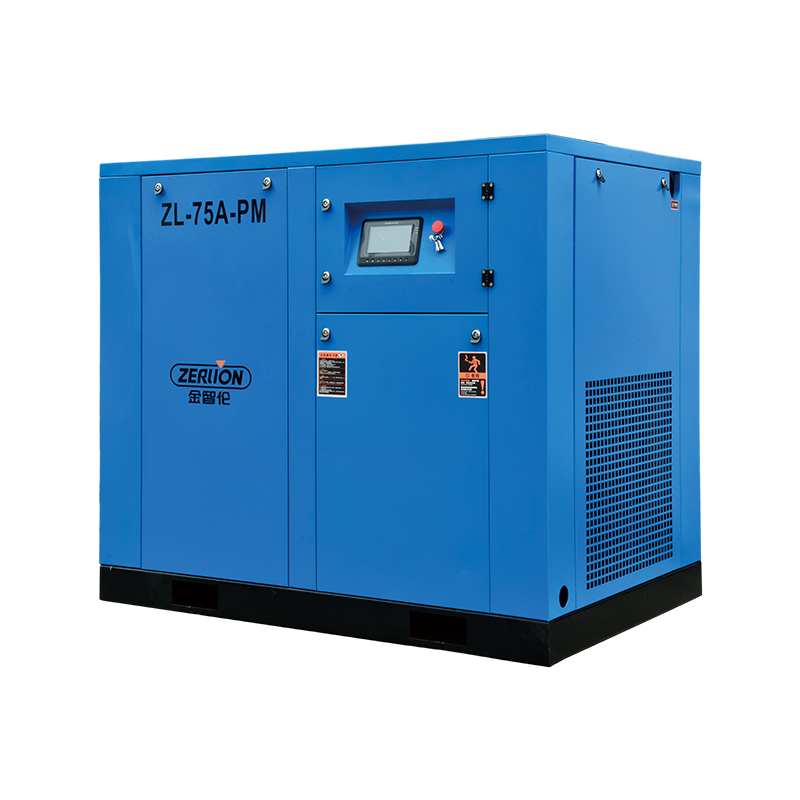
Modular Variable Frequency Screw Air Compressor
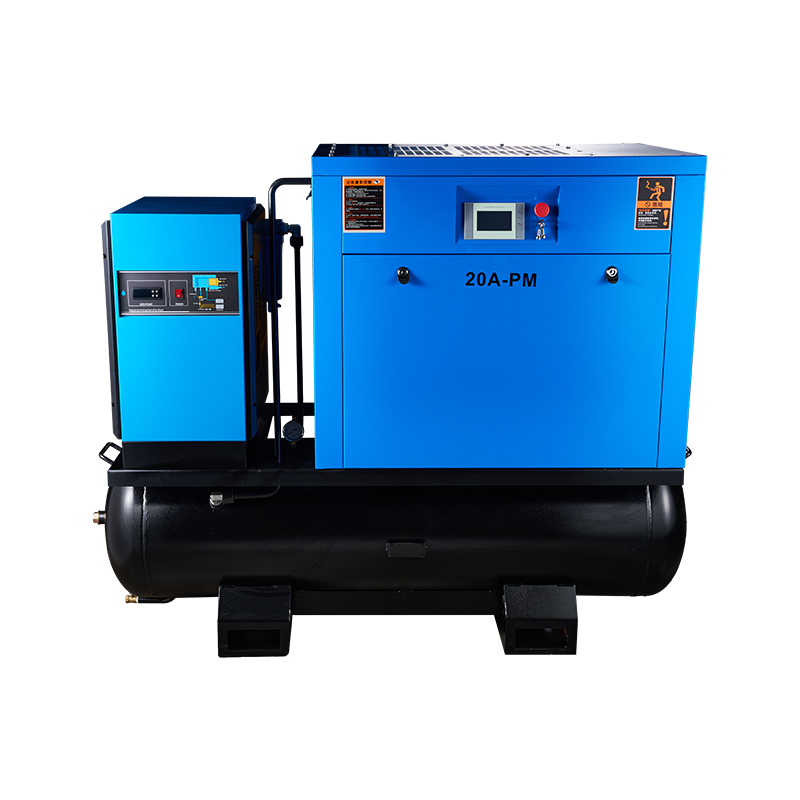
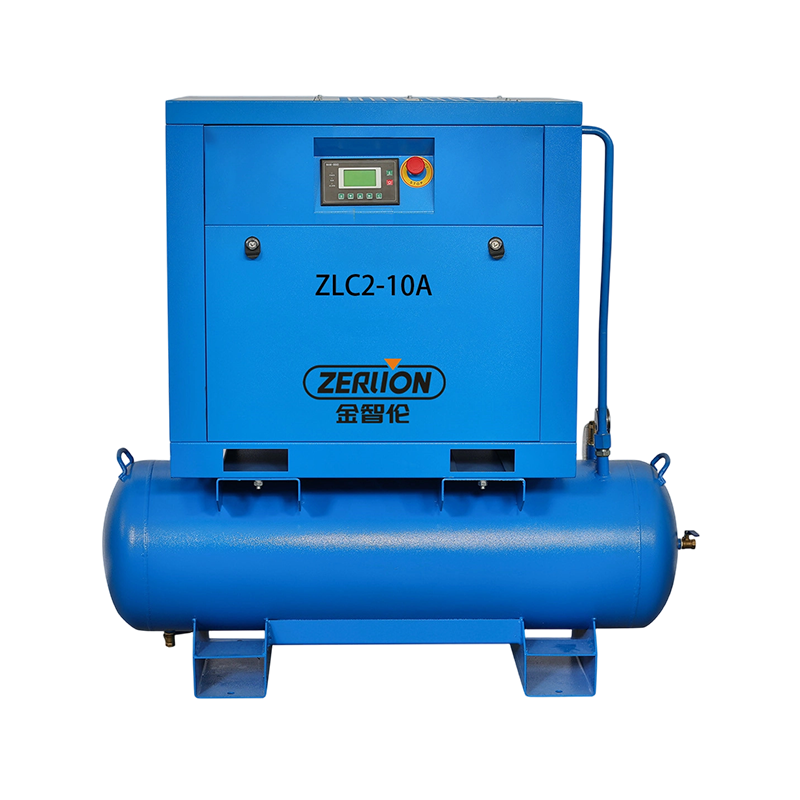
Four-in-One Screw Air Compressor
E-mail: [email protected]
Mob/Wechat/whatsApp:+86-13867656789
Contact Us
Mob/Wechat/whatsApp:+86-13867656789
 View More
  View More
  View More
  View More
  View More
  View More
Manufacturing plants, workshops, and construction sites rely on steady compressed air for tools, machinery, and processes. An Air Compressor Factory works as a specialized partner that designs and bui...
READ MOREAt what temperature does the airend "evaporate" moisture? A stable airend temperature within the proper range is the first line of defense for safe operation of a compressed air system. Many maintena...
READ MORECompressed air systems waste a surprising amount of energy just idling between demand spikes. A factory floor might need full airflow for ten minutes, then almost nothing for the next twenty, and a co...
READ MOREDemand Rises For Low-Pressure Air Systems Compressed air is used across many industrial processes, but not every application requires high-pressure air. Some production equipment needs a steady flow o...
READ MOREThe construction of factory air stations has long followed a rigid logic: first, purchase the main air compressor unit; next, add a storage tank; if high moisture content is detected, install a dryer; and if air quality standards remain unmet, add filters. Equipment is stacked piece by piece, and piping is extended section by section. Ultimately, the compressor room becomes crammed with devices from various manufacturers, each with differing specifications. Maintenance becomes time-consuming and labor-intensive, and troubleshooting requires individually diagnosing each separate unit.
This "piecemeal" approach to air station construction is far from the optimal solution.
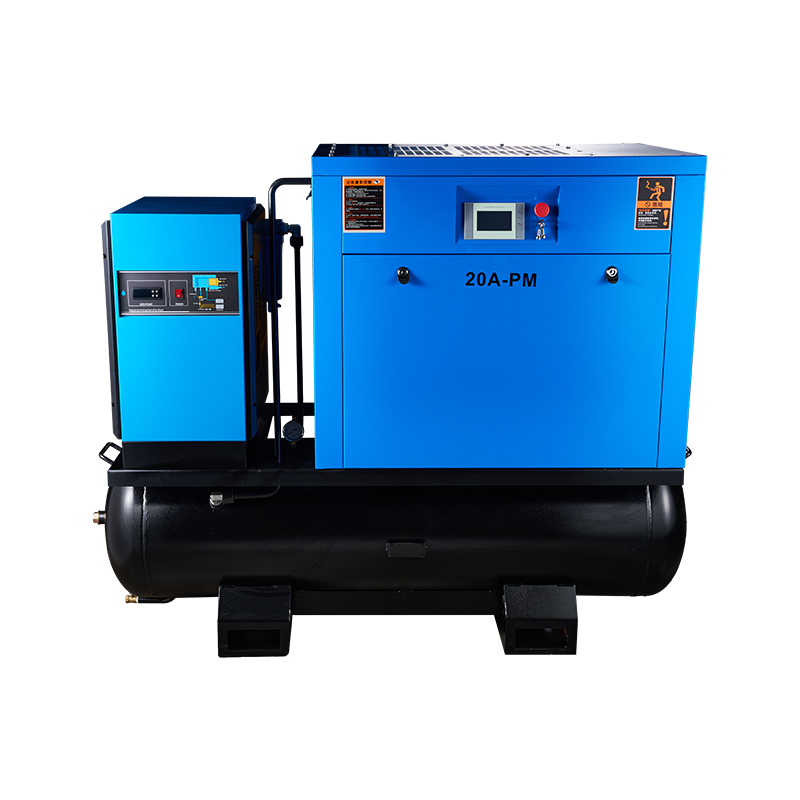
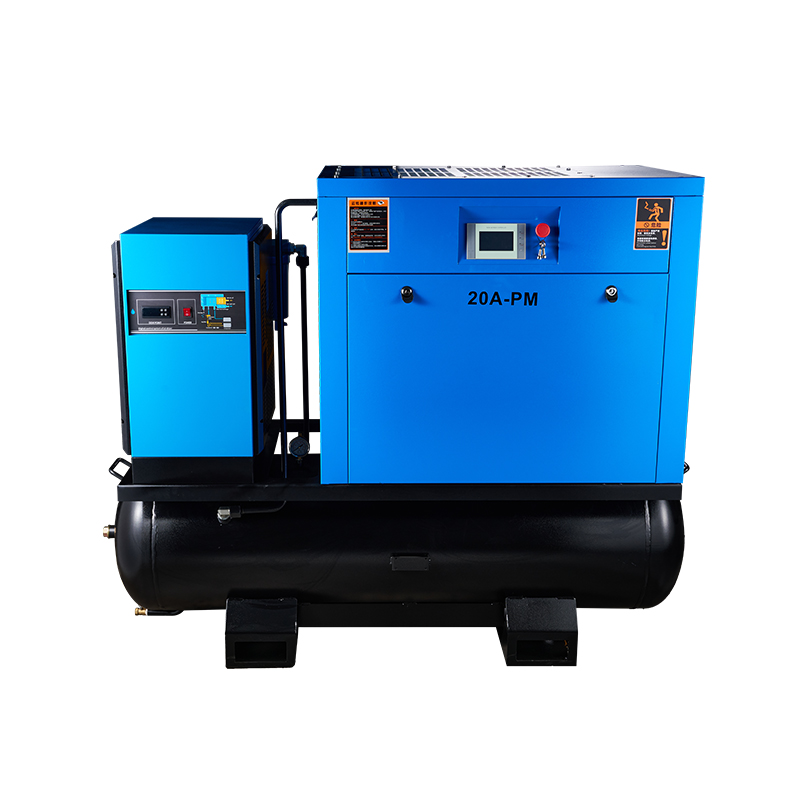
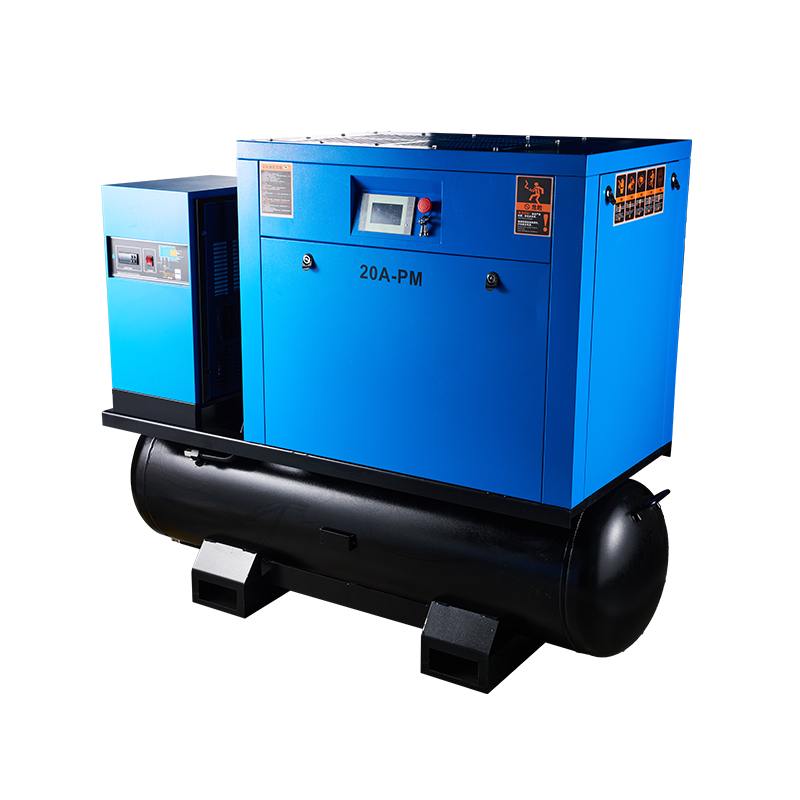
The "Four-in-One" Variable Frequency Drive (VFD) Screw Air Compressor was developed specifically to address this pain point. It offers an integrated solution that consolidates four key functional modules—compression, storage, drying, and filtration—within a single chassis. Coupled with a VFD system for intelligent speed control, this unified system design fundamentally redefines the way factory air stations are built.
To truly appreciate the value of the Four-in-One VFD screw air compressor, one must first understand the specific role each of these four modules plays within the system—and, crucially, what problems their integration solves that a decentralized, separate-component setup cannot.
The 4-in-1 model is not merely a physical stacking of equipment; its core competitive advantage lies in the deep synergy between its Variable Frequency Drive (VFD) system and its integrated functional modules.
The VFD monitors the piping network pressure in real-time, comparing the current pressure reading against a preset target value to automatically adjust the speed of the main motor. When air demand is high, the motor speed increases; when demand decreases, the speed slows down. This mechanism consistently maintains the network pressure within the designated range, eliminating the need for frequent load/unload switching cycles.
This mechanism yields two direct benefits: First, energy savings—by adjusting motor speed according to demand, it completely eliminates the "no-load" energy waste typically associated with fixed-speed compressors operating under light-load conditions. Second, pressure stability—it produces a smoother pressure curve within the network, thereby minimizing the disruptive impact of pressure fluctuations on precision pneumatic equipment and process quality.
For manufacturing facilities with fluctuating air demand, the variable-frequency 4-in-1 solution outperforms traditional fixed-speed, decentralized configurations in terms of both energy efficiency and air supply stability.
| Comparison Dimensions | 4-in-1 Variable Frequency Screw Air Compressor | Traditional Decentralized Configuration |
| Installation Footprint | Compact and integrated; requires minimal floor space | Each component occupies independent space; requires a large area |
| On-site Installation Difficulty | Low; plug-and-play—simply connect piping upon arrival | High; requires individual positioning, piping connections, and system commissioning |
| System Leakage Risk | Low; internal piping is factory-sealed and verified | Higher; involves numerous external joints and valves |
| Pressure Stability | Variable frequency control; minimal pressure fluctuation | Subject to the host unit's load/unload cycles; significant pressure fluctuation |
| Air Purity Assurance | Dryer and filtration modules are factory-matched and integrated | Dependent on the parameter matching accuracy of separate components |
| Energy Efficiency | Variable frequency drive; adjusts speed based on demand for energy savings | Fixed-speed models incur energy waste during unloaded operation |
| Maintenance & Management Complexity | Low; unified maintenance schedule and after-sales support | Higher; multiple separate components require individual management |
| Proximity to Point of Use | Flexible deployment; can be installed right where needed | Restricted by compressor room location; requires longer piping runs |
| Suitable Scenarios | New air station construction, space-constrained environments, desire for simplified management | Existing partial equipment, gradual system expansion/upgrades |
The significance of the 4-in-1 variable frequency screw air compressor lies not merely in consolidating four separate components into a single unit, but in its systematic approach to redesigning the entire process of compressed air generation and treatment. For factories prioritizing installation efficiency, operational simplicity, and air quality, this "turnkey" integrated solution represents a compelling choice for their air station infrastructure.
 +86-576-8262 1313
 +86-576-8262 1216
 +86-13867656789
 +86-13867656789
Xiayun Village, Hengjie Town, Luqiao District, Taizhou City Zhejiang Province, China

Copyright © Zhejiang Zhilun Mechanical & Electrical Co., Ltd. All Rights Reserved.
Air Compressor Factory

