
 English
 русский
 Français
 Español
 Português
Cooperate Hand in Hand · Create Value Together
Welcome to Consult and Visit, We Are Dedicated to Serving You!
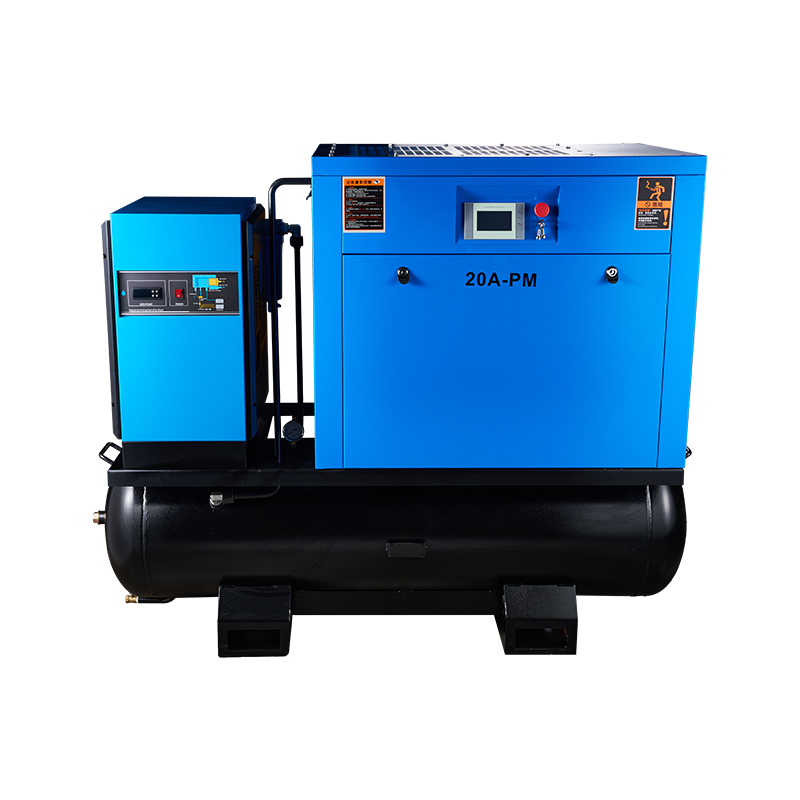
Modular Variable Frequency Screw Air Compressor
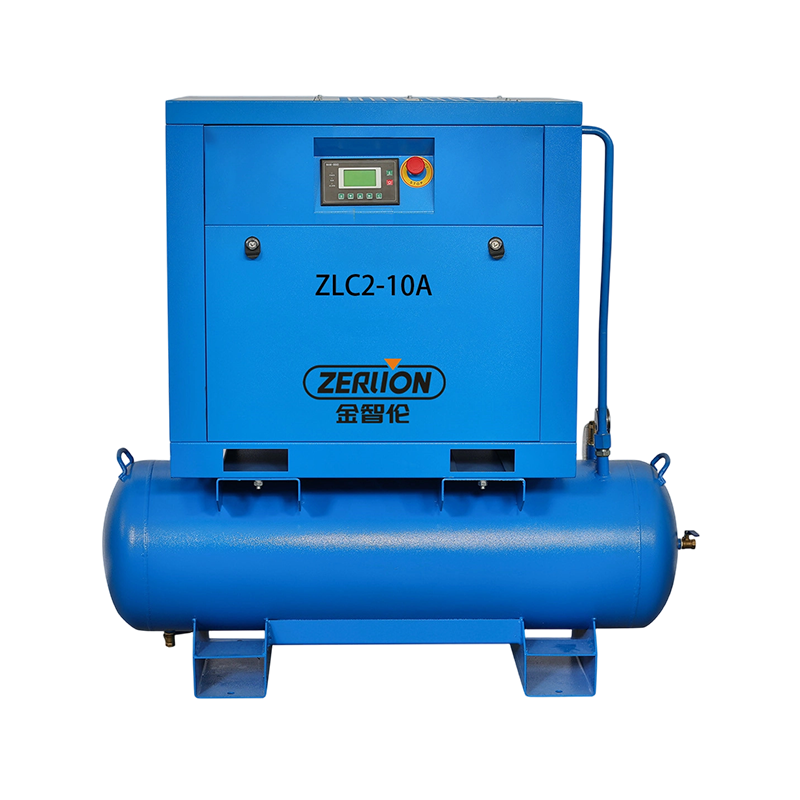
Modular Variable Frequency Screw Air Compressor
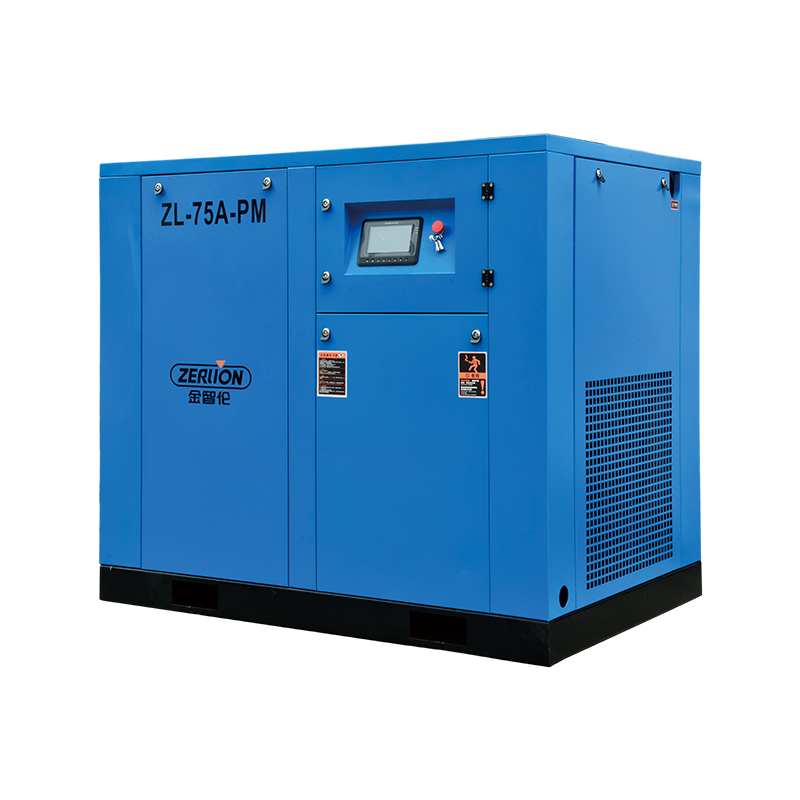
Box-Type Variable Frequency Screw Air Compressor
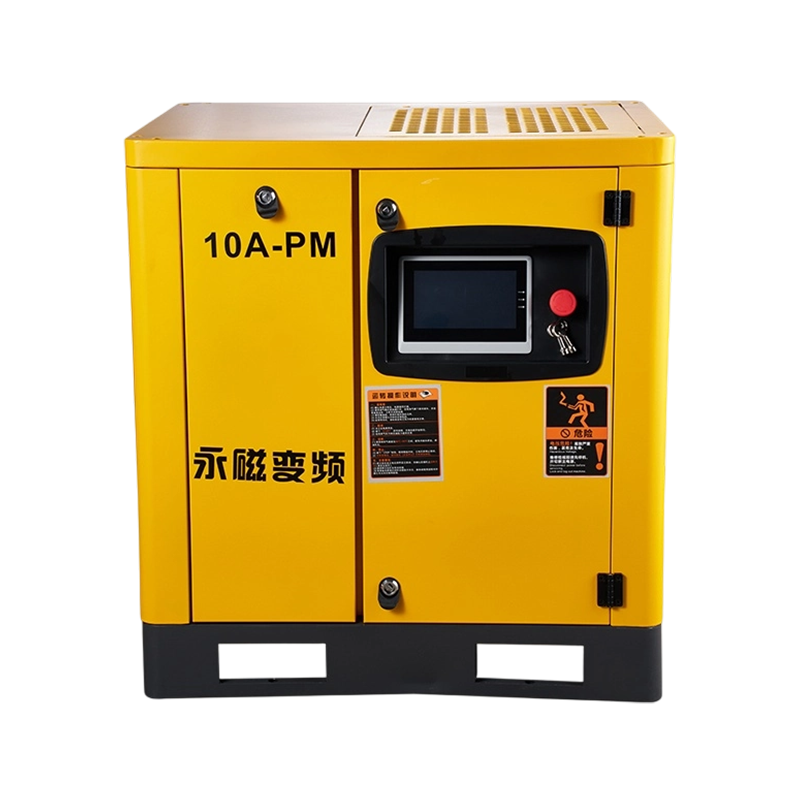
Box-Type Variable Frequency Screw Air Compressor
Variable frequency screw compressors (VFCs) significantly improve energy efficiency, pressure control accuracy, and equipment lifespan compared to traditional fixed-frequency air compressors by adjusting the compressor's speed via a frequency converter.
① Significant Energy Saving: VFCs adjust the compressor's operating state according to actual air demand, avoiding waste caused by the motor operating at its rated power. This is its primary energy-saving feature.
② Stable Air Pressure: The VFC's internal regulator quickly responds to and adjusts to fluctuations in air consumption, maintaining stable pressure in the pipeline system. The VFC control system provides precise pressure control, ensuring the compressor's air pressure output matches the user's air system requirements.
③ Lower Maintenance Costs: VFC starts smoothly, reducing the impact on the equipment and thus lowering maintenance and repair costs. Operating noise is also significantly reduced.

Manufacturing plants, workshops, and construction sites rely on steady compressed air for tools, machinery, and processes. An Air Compressor Factory works as a specialized partner that designs and bui...
READ MOREAt what temperature does the airend "evaporate" moisture? A stable airend temperature within the proper range is the first line of defense for safe operation of a compressed air system. Many maintena...
READ MORECompressed air systems waste a surprising amount of energy just idling between demand spikes. A factory floor might need full airflow for ten minutes, then almost nothing for the next twenty, and a co...
READ MOREDemand Rises For Low-Pressure Air Systems Compressed air is used across many industrial processes, but not every application requires high-pressure air. Some production equipment needs a steady flow o...
READ MORERotary screw machines form a steady stream of compressed air through continuous volume reduction rather than intermittent strokes. In belt-driven screw compressors the electric motor sits separate fro...
READ MOREManufacturing plants running compressed air systems around the clock have been paying closer attention to how their equipment behaves under partial load, and that shift in attention has pushed the per...
READ MOREThe Variable Frequency Screw Air Compressor—also referred to in English as a Variable Frequency Screw Compressor or Inverter-Controlled Screw Compressor—represents a new generation of energy-efficient compression equipment. Built upon the foundation of traditional screw air compressors, it integrates a Variable Frequency Drive (VFD) control system.
Traditional fixed-speed screw air compressors operate at a constant rotational speed once started; regardless of the facility's actual air demand, the motor runs at full speed at all times. When air demand falls below the compressor's rated capacity, the surplus compression energy is squandered through "no-load" or "unloaded" operation—a form of waste that can be surprisingly substantial in actual production environments.
The core logic of the variable frequency screw air compressor is fundamentally different: utilizing an inverter-controlled system, it continuously monitors the pressure within the air supply network and automatically adjusts the motor's rotational speed to precisely match the air output with the actual demand. Higher air demand results in higher motor speeds, while lower demand results in lower speeds, thereby eliminating energy waste at the source.
1. Significant Energy Savings: Directly Reducing Operating Costs
This constitutes the primary competitive advantage of variable frequency models. Take a 75kW air compressor as an example: if it operates for 6,000 hours per year, a 30% reduction in electricity consumption translates to an annual saving of approximately 135,000 kWh. Based on standard industrial electricity rates, the energy cost savings accumulated over just three years are sufficient to fully offset the price premium of the variable frequency unit compared to a standard model.
2. Precise Pressure Control: Ensuring a More Stable Air Supply
Fixed-speed compressors rely on frequent "loading" and "unloading" cycles to maintain pressure, resulting in periodic fluctuations within the air supply network. Variable frequency compressors, conversely, utilize continuous speed modulation to keep pressure fluctuations within a tight tolerance of ±0.01 MPa. This feature is particularly beneficial for applications with stringent requirements for air source stability—such as precision machining, industrial painting and coating, and electronics manufacturing.
3. Minimized Start-up Impact: Extending Equipment Lifespan
The variable frequency "soft start" mechanism ensures a gradual ramp-up of motor current, thereby avoiding the massive current surge—typically 5 to 7 times the rated current—that occurs when fixed-speed compressors undergo a direct-on-line start. This provides significant protection for the power grid, the motor itself, and the compressor's air-end bearings, resulting in a substantially extended overall service life for the entire unit. Fourth: Lower Noise Levels, Improved Working Environment
Under partial-load conditions, variable-frequency compressors operate at speeds below their rated maximum; consequently, both mechanical noise and airflow noise are reduced in tandem. The overall noise level of the unit is typically 5 to 10 dB lower than that of fixed-speed compressors, thereby contributing to a more favorable working environment within the workshop.
Notably, variable-frequency technology is no longer the exclusive domain of large-scale, stationary equipment. In recent years, Small Portable Screw Compressors have also begun to integrate variable-frequency drive systems, emerging as a compelling new option for small-to-medium-sized factories and mobile operational settings.
Small variable-frequency screw compressors typically feature the following characteristics: lightweight construction and a compact footprint, facilitating flexible repositioning within a workshop or easy transport to construction sites. When paired with variable-frequency control, they deliver effective energy savings—even in small-scale environments where air demand fluctuates. Furthermore, their extended maintenance intervals and low daily operating costs make them an ideal choice for small and medium-sized enterprises (SMEs) with limited human resources.
For small factories or maintenance service providers with modest air consumption requirements—yet specific demands regarding operational stability and energy efficiency—small variable-frequency screw compressors represent a pragmatic choice that successfully balances both flexibility and economic viability.
Not all operating conditions allow for the full realization of a variable-frequency compressor's energy-saving potential. The following scenarios typically yield the highest return on investment when upgrading to a variable-frequency screw compressor:
Before Purchasing a Variable Frequency Screw Air Compressor, These Three Points Must Be Verified:
Variable frequency screw air compressors have emerged as the mainstream solution for energy-efficient upgrades within industrial air supply stations. Whether involving large-scale stationary units or small portable screw compressors, the adoption of variable frequency technology translates into lower operating costs, more stable air supply quality, and an extended service life for the equipment.
 +86-576-8262 1313
 +86-576-8262 1216
 +86-13867656789
 +86-13867656789
Xiayun Village, Hengjie Town, Luqiao District, Taizhou City Zhejiang Province, China

Copyright © Zhejiang Zhilun Mechanical & Electrical Co., Ltd. All Rights Reserved.
Custom Inverter Controlled Screw Air Compressor

