
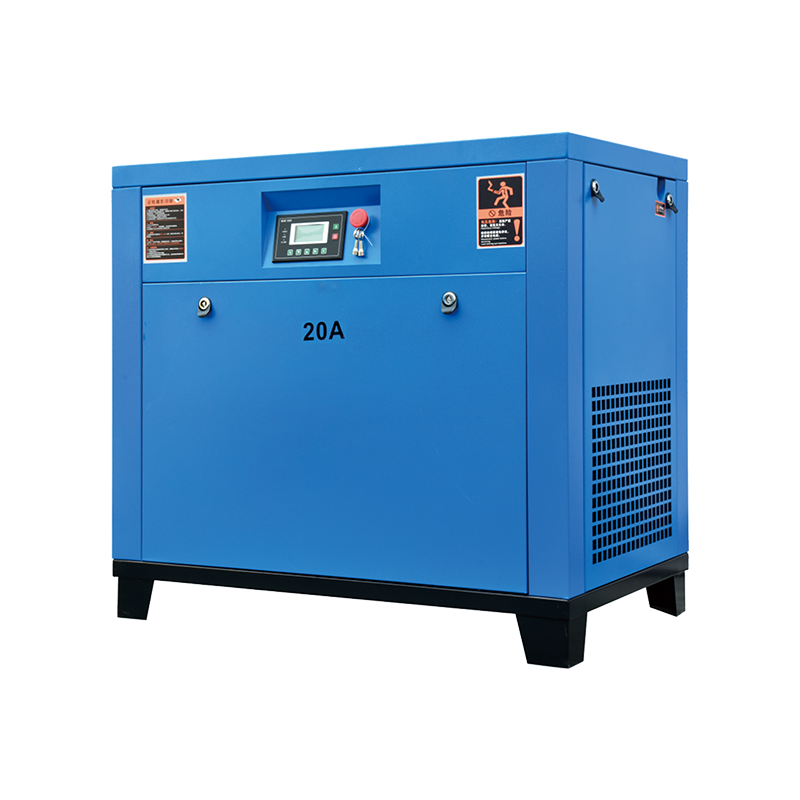
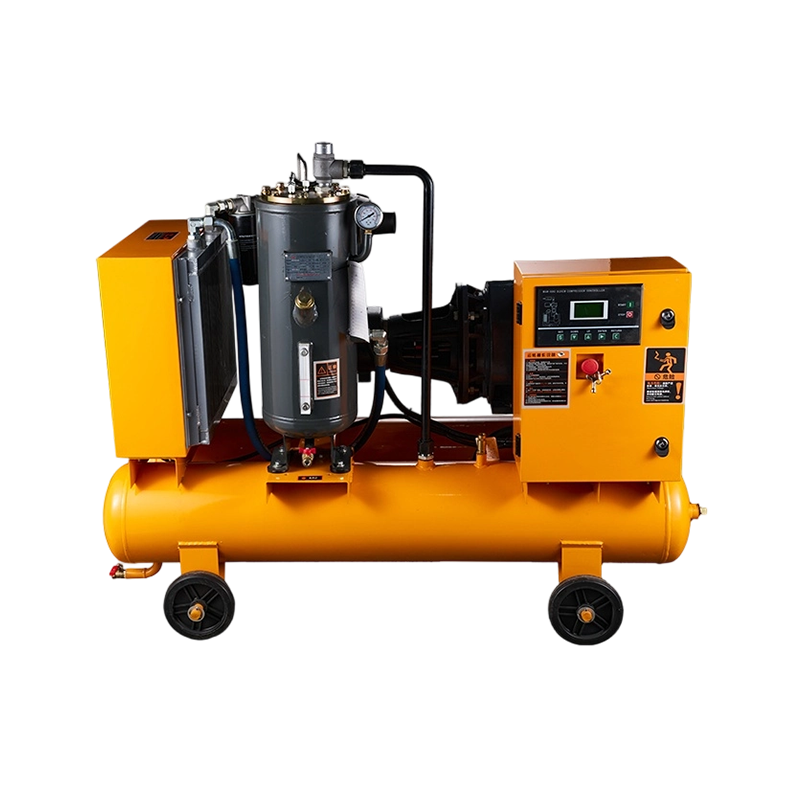
Small Portable Screw Compressors work differently from the piston-based units many people picture when they think of an air compressor. Instead of a piston moving up and down, two interlocking rotors spin together, trapping and compressing air as they turn. This design helps Small Portable Screw Compressors deliver smoother operation and a steadier airflow, which is useful for applications that require consistent air pressure rather than short bursts.
Making a screw compressor "portable" isn't just about slapping wheels on a bigger unit. Engineers have to shrink the housing, rework the cooling system, and often switch to a smaller, more efficient motor — all while keeping the airflow output usable for real tools. A compressor that's too weak after being downsized ends up frustrating whoever's using it in the field.
That balancing act is part of why smaller units vary so much in performance from one manufacturer to another. Two compressors might look nearly identical on the outside and behave completely differently once they're under load for an extended stretch. Rotor design, motor quality, and how well the unit manages heat all factor into that gap.
Portable screw compressors show up across a wider range of settings than people expect:
Each of these uses puts slightly different demands on the compressor. A construction crew might prioritize noise levels and how quickly the unit reaches working pressure. A mobile repair vehicle cares more about how compact the unit is and whether it fits into a limited cargo space. There isn't one version of "portable" that fits every use case equally well.
Buyers shopping for a portable compressor tend to focus on airflow output first, which makes sense — it's the number that determines whether the tool actually works. But noise level and weight end up mattering just as much once the unit is actually in use. A compressor that's loud enough to require hearing protection changes the whole dynamic on an indoor job. One that's too heavy for a single person to move defeats a lot of the point of "portable" in the first place.
Some manufacturers address this by using sound-dampened housings or lighter frame materials, though that usually comes with trade-offs elsewhere — either in cost or in how much airflow the unit can sustain. There's rarely a version that scores well on every front at once; buyers generally end up prioritizing the one or two factors that matter most for their specific work.
Buyers sourcing small portable screw compressors tend to circle back to a similar set of practical questions before committing to an order:
These questions don't have one right answer. Small Portable Screw Compressors may perform differently depending on temperature, humidity, and operating conditions, and airflow ratings on paper may vary during continuous use. Clear communication from the manufacturer often matters as much as the specifications themselves.
 View More
 View More
 View More
 View More
 View More
 View More
 +86-576-8262 1313
 +86-576-8262 1216
 +86-13867656789
 +86-13867656789
Xiayun Village, Hengjie Town, Luqiao District, Taizhou City Zhejiang Province, China

Copyright © Zhejiang Zhilun Mechanical & Electrical Co., Ltd. All Rights Reserved.
Air Compressor Factory

 English
 русский
 Français
 Español
 Português
