
There's a sound every plant manager knows without thinking about it — that steady mechanical hum running under everything else on the floor. Lately, though, plenty of them have started paying closer attention to it. Not because it's louder or different exactly, but because someone in accounting mentioned the power bill again, and suddenly that hum has a price tag attached. That's usually where the conversation about energy-saving screw compressors starts.
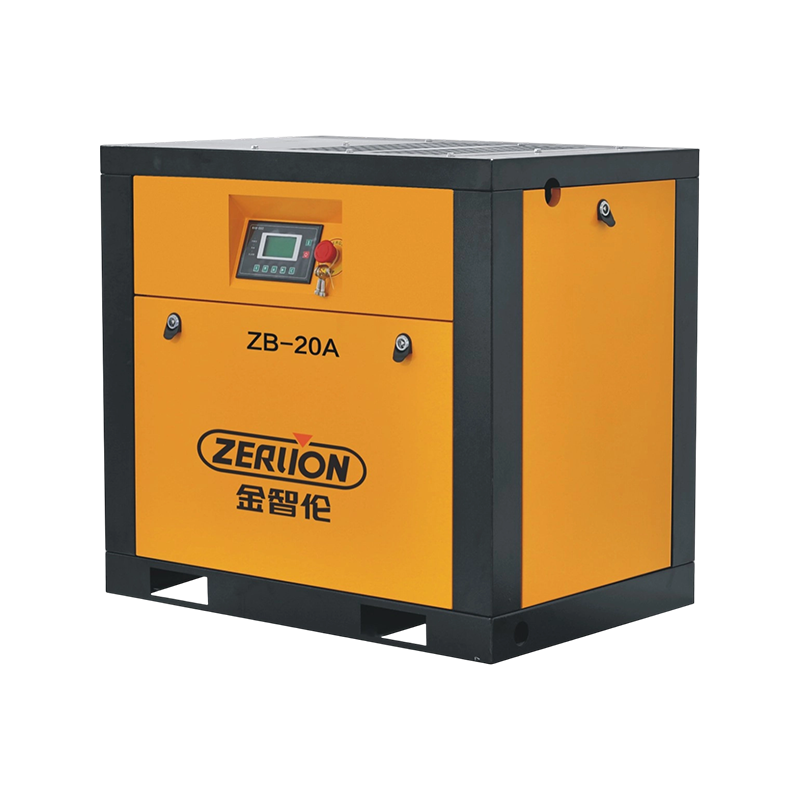
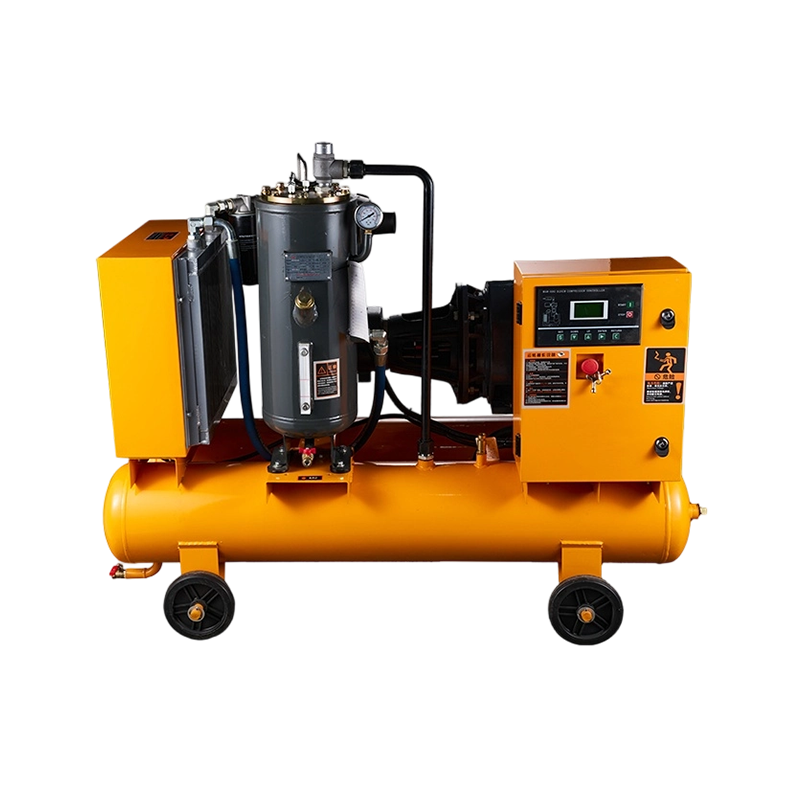
Here's the basic mechanics of it: a screw compressor traps air between two rotors that spin together, squeezing it tighter as they turn. Simple enough. The energy-saving versions tweak that process in a few specific ways — variable frequency drives that let motor speed track actual air demand instead of running flat-out all day, rotor shapes reworked to cut down on internal friction, and permanent magnet motors that just don't bleed off as much energy as heat.
None of this matters much if a plant's air demand never changes. But it rarely stays flat. Demand rises and falls across a shift, sometimes by a lot, and that's exactly when older fixed-speed units start wasting power — they keep running at full tilt even when nobody actually needs that much air. Buyers who've done their homework tend to zero in on partial-load behavior for this reason. A compressor that eases down smoothly when demand drops will usually pull noticeably less power over a full day than one built only for constant, maximum output.
Talk to enough procurement teams and the same handful of questions come up again and again. How fast does the variable frequency drive react when demand spikes out of nowhere? Is it quieter at low load, or does it still run loud regardless of output? Will it actually talk to the plant's existing monitoring software, or is this one more standalone system to manage separately?
None of these are throwaway questions. Compressed air systems don't sit off in their own corner — they're wired into everything else on the floor, and a unit that doesn't play well with existing controls tends to create more headaches than it solves. OEM and private-label buyers, in particular, like to nail down compatibility details early. Better to know before the purchase order goes out than after.
Fixed-speed compressors do things the old way: run at one constant speed, cycle on and off to manage output. That cycling adds up over time — more mechanical wear, more wasted power during the idle stretches between cycles. Variable-speed units sidestep this by adjusting continuously rather than snapping between full power and standby.
The gap between the two designs comes down largely to one variable: how steady a facility's air demand actually is. Plants running consistent, round-the-clock air use often see little difference between fixed and variable options. Facilities with demand that swings — multiple shifts, seasonal production cycles — tend to notice where energy-saving screw compressors separate themselves, sometimes sooner than plant managers expect.
 View More
 View More
 View More
 View More
 View More
 View More
 +86-576-8262 1313
 +86-576-8262 1216
 +86-13867656789
 +86-13867656789
Xiayun Village, Hengjie Town, Luqiao District, Taizhou City Zhejiang Province, China

Copyright © Zhejiang Zhilun Mechanical & Electrical Co., Ltd. All Rights Reserved.
Air Compressor Factory

 English
 русский
 Français
 Español
 Português
