
 English
 русский
 Français
 Español
 Português
Cooperate Hand in Hand · Create Value Together
Welcome to Consult and Visit, We Are Dedicated to Serving You!
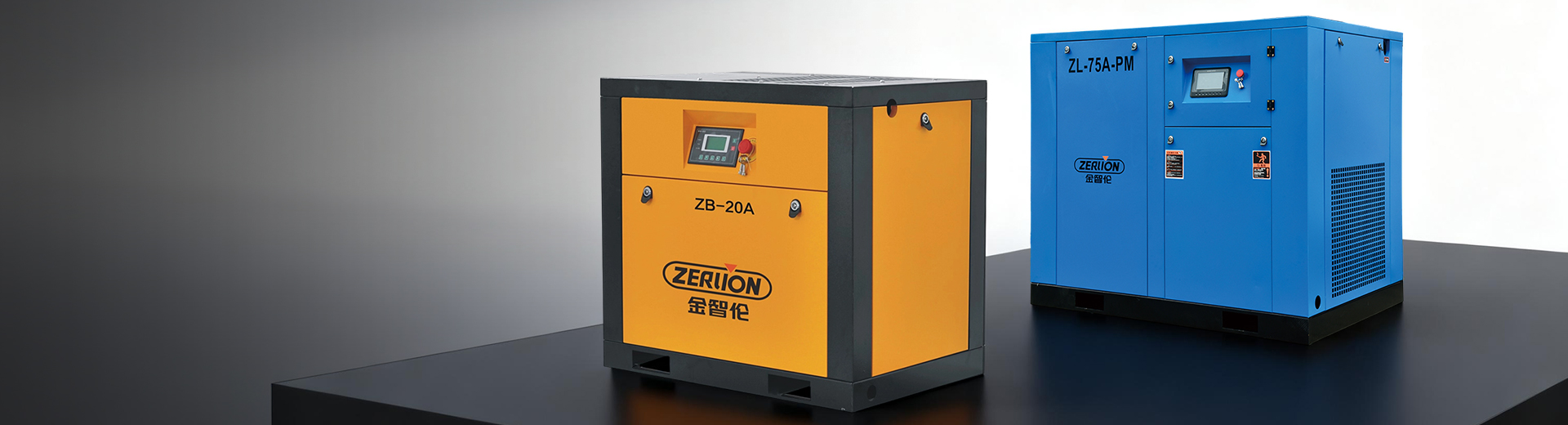
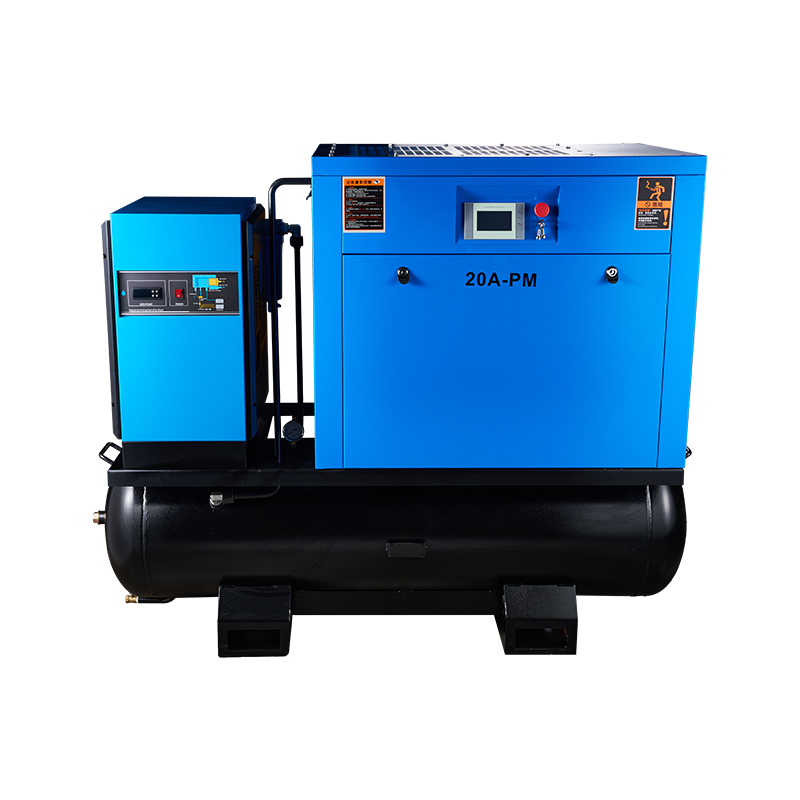
Modular Variable Frequency Screw Air Compressor
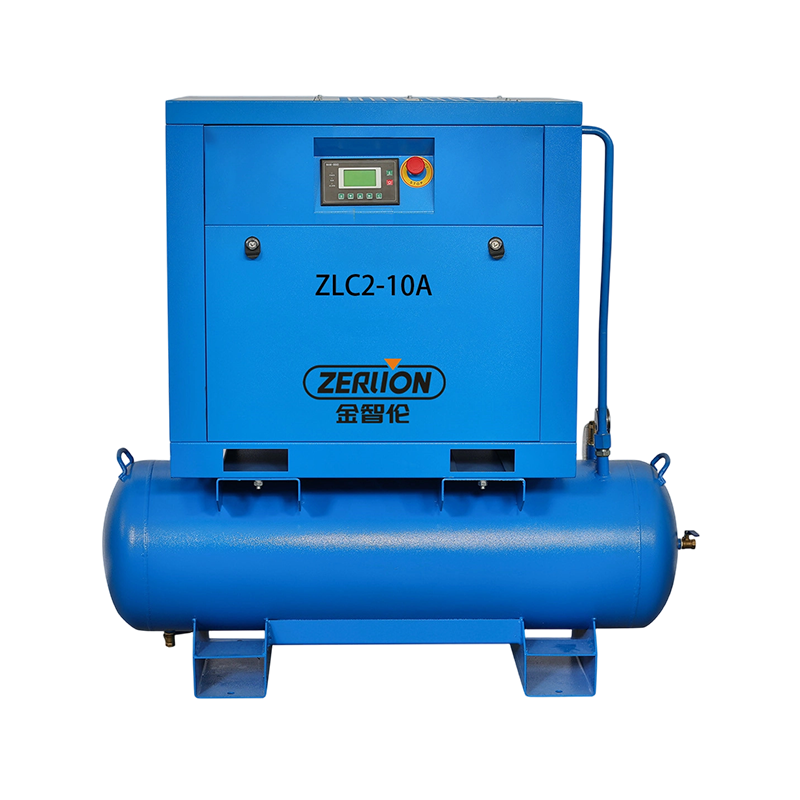
Modular Variable Frequency Screw Air Compressor
In the industry, this typically refers to a system that pre-integrates a variable frequency screw compressor with additional post-processing equipment (such as refrigerated dryers, filters, etc.) or auxiliary systems (such as air tanks) onto a common base or frame.
The modular unit focuses on integrating air compression and purification processes into a single unit, providing a "plug-and-play" compressed air station.
① Modular Integration, Space Saving
This is the most significant feature. The screw compressor, air tank (for buffering and stabilizing pressure), refrigerated dryer (for removing moisture), and precision filter (for removing oil and dust) are compactly installed on a common base. This significantly saves on-site installation space and piping connections for the user.
② Core Remains Variable Frequency Energy Saving
By adjusting the motor speed in real time via a frequency converter, the air production rate is precisely matched to the air demand, resulting in significant energy savings during demand fluctuations (such as production line shift changes).
③ Provides Ready-to-Use Quality Air
Through built-in post-processing equipment, compressed air with a certain level of dryness and cleanliness can be directly output, meeting the needs of applications requiring high-quality air sources.
④ Easy installation. The equipment has completed the pipe connection between modules and the overall debugging before leaving the factory. After arriving at the site, it can be put into use simply by connecting the main power supply and the outlet pipe, which greatly shortens the installation cycle.
Manufacturing plants, workshops, and construction sites rely on steady compressed air for tools, machinery, and processes. An Air Compressor Factory works as a specialized partner that designs and bui...
READ MOREAt what temperature does the airend "evaporate" moisture? A stable airend temperature within the proper range is the first line of defense for safe operation of a compressed air system. Many maintena...
READ MORECompressed air systems waste a surprising amount of energy just idling between demand spikes. A factory floor might need full airflow for ten minutes, then almost nothing for the next twenty, and a co...
READ MOREDemand Rises For Low-Pressure Air Systems Compressed air is used across many industrial processes, but not every application requires high-pressure air. Some production equipment needs a steady flow o...
READ MORERotary screw machines form a steady stream of compressed air through continuous volume reduction rather than intermittent strokes. In belt-driven screw compressors the electric motor sits separate fro...
READ MOREManufacturing plants running compressed air systems around the clock have been paying closer attention to how their equipment behaves under partial load, and that shift in attention has pushed the per...
READ MOREThanks to their flexible architectural design, exceptional energy-saving performance, and intelligent control capabilities, Modular Variable Frequency Screw Compressors are rapidly becoming the preferred equipment across a wide range of industries, including manufacturing, electronics, and food processing.
A Modular Variable Frequency Screw Compressor represents a new generation of gas compression equipment that deeply integrates Variable Frequency Drive (VFD) technology with a modular mechanical structure. Unlike traditional fixed-speed compressors, this system can adjust the motor speed in real-time based on actual air demand, thereby precisely matching the output air volume and eliminating the energy waste associated with "oversizing"—using a machine far larger than necessary for the load.
The core advantage of this modular design lies in its flexibility: individual compressor units can operate independently, while multiple units can be flexibly connected in parallel to achieve staged capacity expansion. Whether for a small workshop or a large-scale factory, the system can be configured precisely according to demand, significantly reducing both initial capital investment and future expansion costs.
Traditional compressors operate at a fixed speed; consequently, they continue to run at full load even during periods of low air demand, resulting in significant wasted electricity. In contrast, Variable Frequency Screw Compressors are equipped with high-precision pressure sensors and intelligent controllers that automatically adjust the motor speed within a tight pressure fluctuation range—typically just 0.01 MPa—thereby reducing system energy consumption by 20% to 40%.
In operating environments characterized by higher air volume requirements and more demanding pressure specifications, the Two-Stage Variable Frequency Screw Air Compressor demonstrates advantages that are simply unattainable by single-stage models.
The operating principle of two-stage compression involves pressurizing the gas sequentially across two distinct stages: the first stage performs low-pressure compression; after passing through an intercooler to reduce its temperature, the gas then enters the second stage for high-pressure compression. This design effectively lowers the compression ratio for each individual stage, minimizes the generation of heat during compression, and ultimately enhances both the volumetric efficiency and overall reliability of the compressor unit. Compared to single-stage variable-frequency compressors, two-stage variable-frequency models offer the following core advantages:
For air-intensive industries—such as automotive manufacturing, steel metallurgy, and large-scale spray painting lines—two-stage variable-frequency screw air compressors represent the ideal choice for achieving efficient and reliable air compression.
Competition among modern, high-end screw compressors has now extended deep into the realm of component manufacturing precision. Laser-Cut Screw Compressors represent a new manufacturing standard in this field.
The application of laser cutting technology to the fabrication of compressor casings, cooler fins, and critical structural components offers the following distinct advantages over traditional mechanical stamping processes:
Integrating laser cutting technology into the manufacturing system for modular variable-frequency screw compressors not only improves the unit's airtightness and heat dissipation capabilities but also ensures that the equipment maintains stable output even under harsh operating conditions, such as high temperatures and high humidity.
Modular variable-frequency screw compressors are widely applicable in the following sectors:
When selecting a unit, it is recommended to conduct a comprehensive assessment based on three core parameters: actual maximum air consumption, operating pressure, and the continuity of air demand. Where necessary, a parallel configuration utilizing multiple modular units can be adopted to ensure both system redundancy (backup capability) and energy-efficient operation.
 +86-576-8262 1313
 +86-576-8262 1216
 +86-13867656789
 +86-13867656789
Xiayun Village, Hengjie Town, Luqiao District, Taizhou City Zhejiang Province, China

Copyright © Zhejiang Zhilun Mechanical & Electrical Co., Ltd. All Rights Reserved.
Two-Stage Variable Frequency Screw Air Compressor Supplier

