
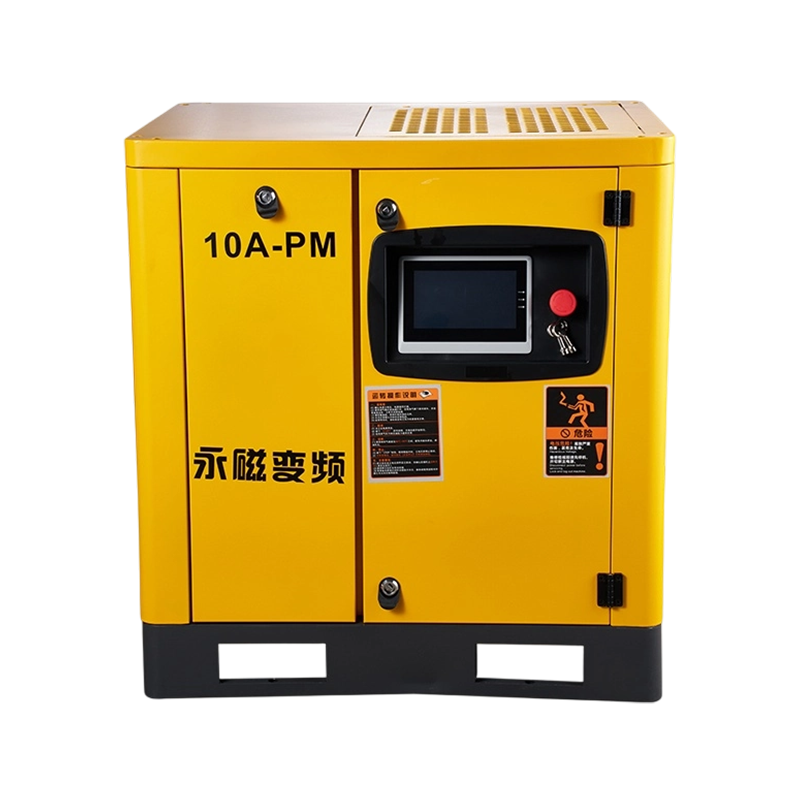
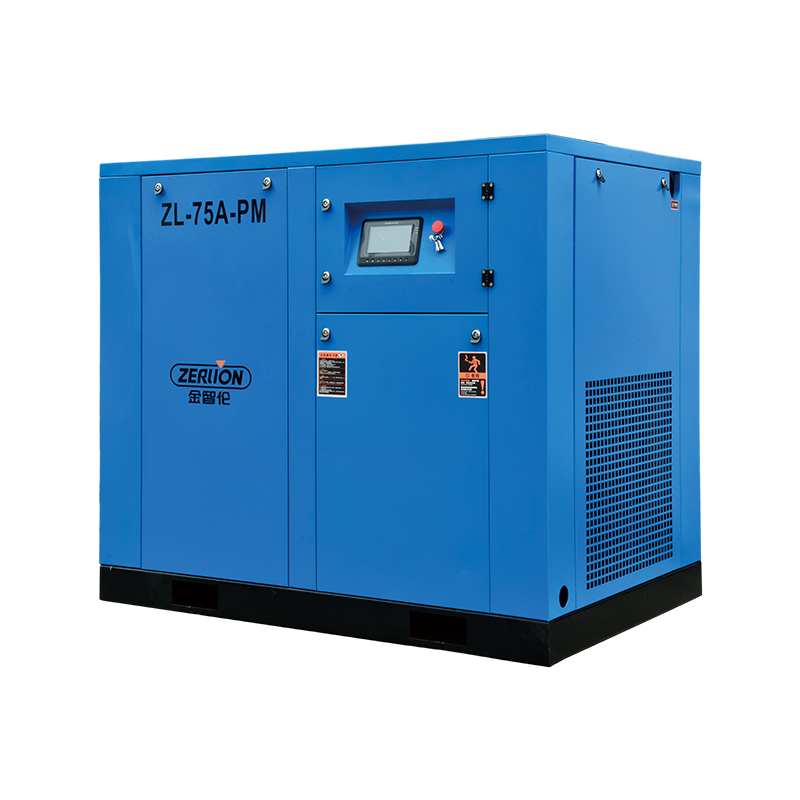
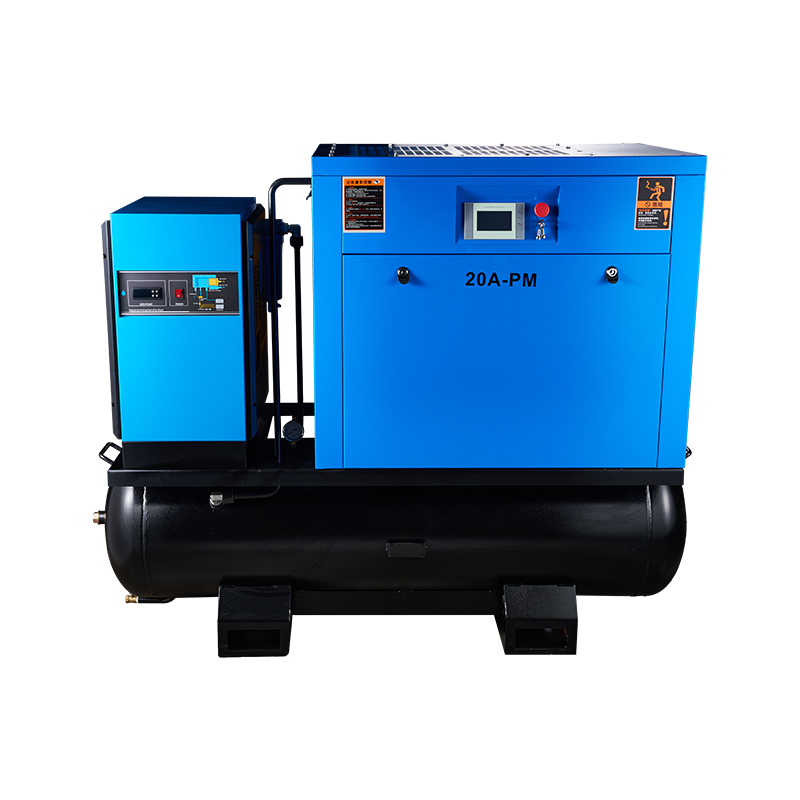
The combination of direct-drive and constant-speed operation is often overlooked; however, in specific industrial scenarios, the stability and durability demonstrated by this configuration are precisely what variable-frequency or belt-driven models struggle to fully replicate. The Industrial Direct-Drive Constant-Speed Screw Air Compressor maintains a solid market position in heavy industry, continuous manufacturing, and high-load air consumption environments, distinguished by its short transmission path, low mechanical loss, and rapid response speed.
Direct-Drive and Constant-Speed Operation: Defining the Two Key Terms
To understand this equipment, one must first clarify the two core concepts: "direct-drive" and "constant-speed."
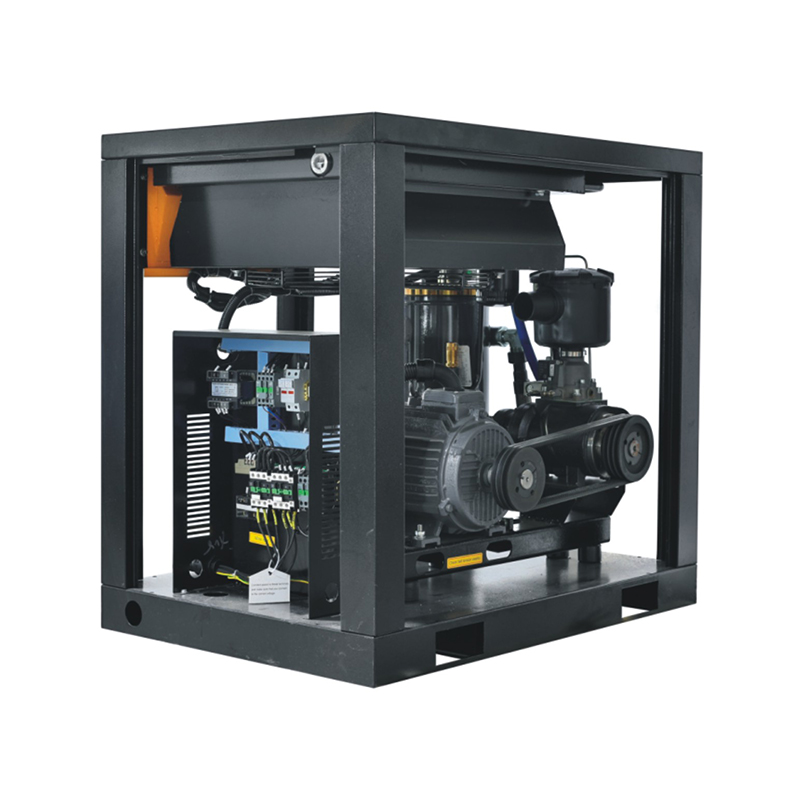
Direct-drive refers to a configuration where the motor shaft is directly connected to the screw air-end rotor shaft via a coupling, bypassing intermediate transmission components such as belts or gears. This method transmits the motor's output torque to the screw air-end with virtually no loss, resulting in significantly higher transmission efficiency compared to belt-driven systems. Furthermore, by eliminating the belt—a consumable component prone to wear—it mitigates the risks of efficiency degradation and maintenance-related downtime caused by belt aging or slackening.
Constant-speed operation refers to the motor running continuously at its rated speed (corresponding to the mains frequency of 50 Hz or 60 Hz), delivering stable rotational speed and torque. Consequently, the screw air-end compresses gas at a fixed speed, ensuring that the air output volume and working pressure remain constant. Unlike variable-frequency drive (VFD) models—which dynamically adjust motor speed based on air demand—constant-speed compressors maintain a stable output by utilizing load/unload control mechanisms to satisfy system pressure requirements.
Core Advantages of Direct-Drive Constant-Speed Screw Air Compressors
The direct-drive structure eliminates the energy losses typically associated with belt-driven systems, such as those caused by slippage and friction. Given the same motor power input, direct-drive models are able to transmit more effective power to the air-end, resulting in superior energy efficiency per unit of output under rated operating conditions.
The absence of a belt means there is no need for periodic belt tension checks or belt replacements, there by eliminating one routine maintenance procedure. The overall machine structure is more streamlined, and potential failure points are relatively centralized, facilitating rapid troubleshooting and problem resolution by maintenance personnel.
It features stable startup response and is well-suited for frequent loading and unloading cycles.
The rigid connection inherent in the direct-drive system enables the air-end to respond more promptly to changes in motor output. During the transition between loading and unloading, system pressure fluctuations are minimized, helping downstream pneumatic equipment maintain a stable operating state.
Under prolonged full-load or high-load-factor operating conditions, the thermal equilibrium between the motor and the air-end in a fixed-speed compressor remains highly stable. Compared to the heat management challenges faced by variable-frequency compressors during extended high-frequency operation, the thermal management design of fixed-speed compressors is more mature, and their long-term reliability is well-proven.
Standard industrial-frequency motors and direct-drive couplings feature simple structures, and spare parts are readily available in the market. When equipment maintenance is required, the lead times and costs for obtaining components are relatively controllable, thereby minimizing the impact on continuous factory production.
Applicable Industries and Typical Scenarios
Direct-drive fixed-speed screw air compressors offer distinct advantages in the following industries and scenarios:
Key Selection Parameters Comparison Table
| Selection Dimension | Key Considerations |
| Air Displacement Matching | Calculated based on the system's total air consumption and the simultaneous usage coefficient. |
| Rated Pressure Selection | Determined comprehensively by combining the maximum required air pressure with pipeline pressure drop considerations. |
| Motor Power Confirmation | Must be matched with the plant's power distribution capacity and the selected motor starting method. |
| Transmission Method | Direct-drive transmission is suitable for applications involving high load factors and strict maintenance requirements. |
| Cooling Solution | Select air-cooling or water-cooling based on the installation environment temperature and available water source conditions. |
| Control System | Choose between basic pressure control or an intelligent multi-unit joint control (multi-machine linkage control) scheme. |
| Installation Conditions | Assess foundation load-bearing capacity, inlet/outlet pipe diameters, and available space for heat dissipation and ventilation. |
| Noise Control | Consider the use of soundproof enclosures or specific compressor room layouts based on workshop noise standards. |
Maintenance Management: The Key to Extending Equipment Lifespan
The maintenance framework for direct-drive, fixed-speed screw air compressors is relatively mature. The following points highlight the key areas requiring focused attention during routine management:
The industrial direct-drive fixed-speed screw air compressor is not an obsolete technology; rather, it is a mature solution that has been extensively validated over time to meet specific industrial demands. For production environments characterized by high air consumption, high load factors, and stringent requirements for air supply stability, its superior transmission efficiency, structural reliability, and ease of maintenance collectively form a comprehensive system for ensuring a reliable industrial air supply. When selecting equipment, making decisions based on a combination of actual air usage characteristics and the factory's operational and maintenance capabilities ensures that every air compressor is deployed in the role best suited to its capabilities, thereby delivering its full intrinsic value.
 View More
 View More
 View More
 View More
 View More
 View More
 +86-576-8262 1313
 +86-576-8262 1216
 +86-13867656789
 +86-13867656789
Xiayun Village, Hengjie Town, Luqiao District, Taizhou City Zhejiang Province, China

Copyright © Zhejiang Zhilun Mechanical & Electrical Co., Ltd. All Rights Reserved.
Air Compressor Factory

 English
 русский
 Français
 Español
 Português
