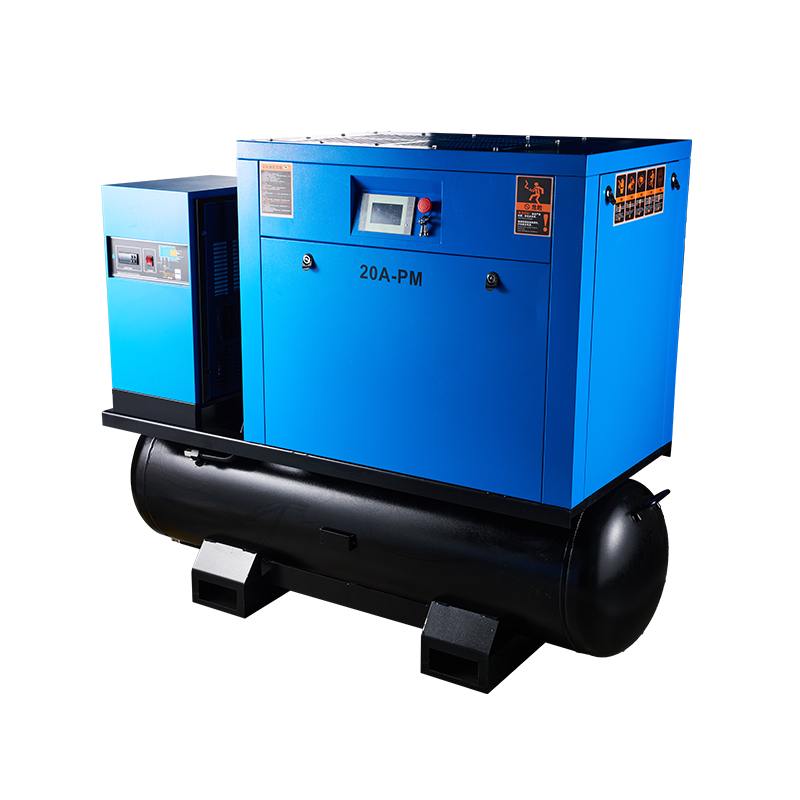
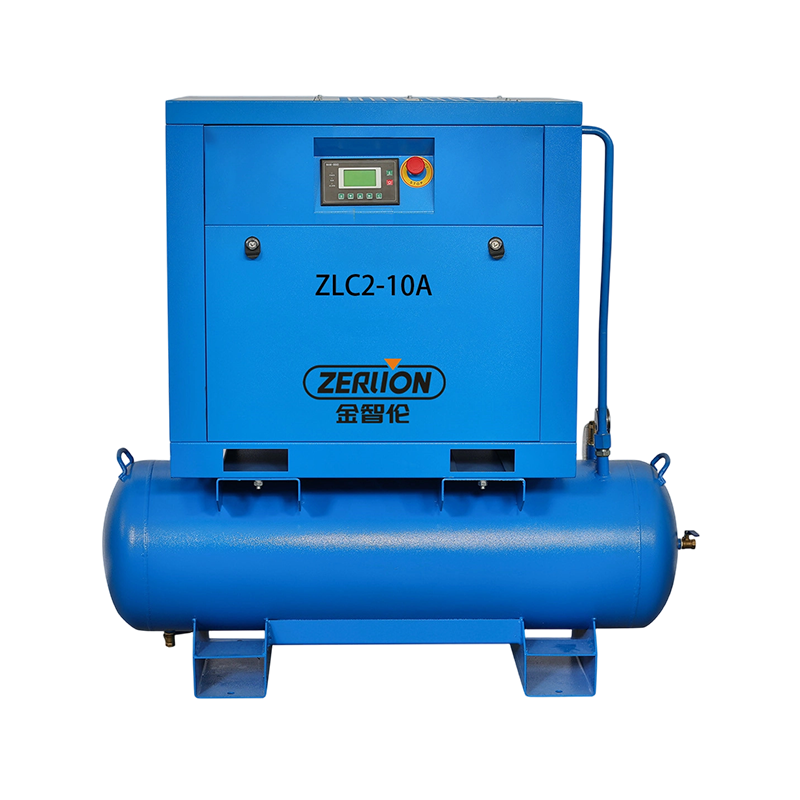
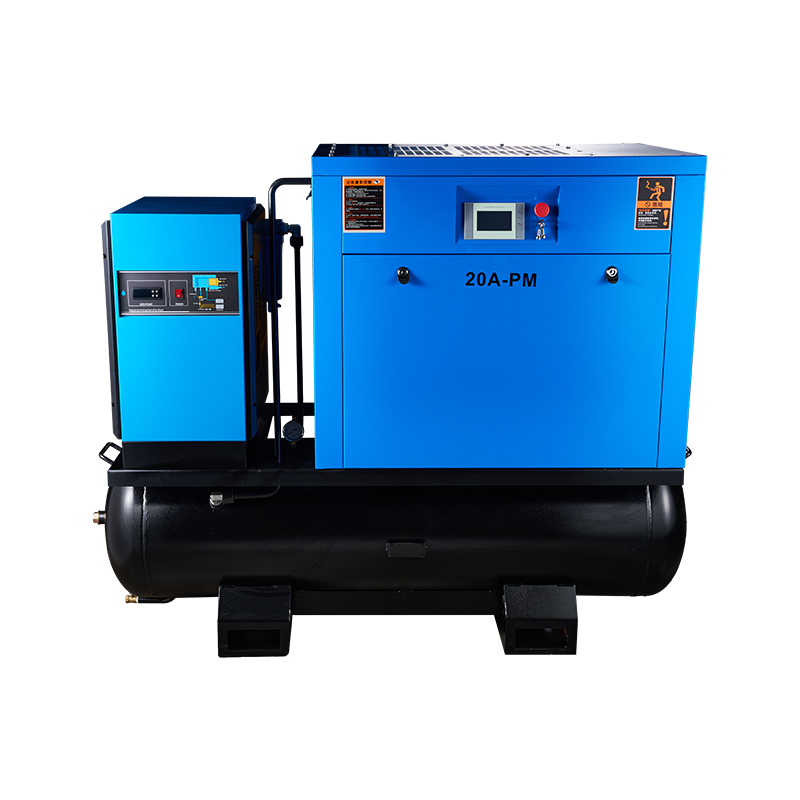
The 4-in-1 Multifunctional Combined Screw Air Compressor has emerged as an innovative compressed air solution, gaining increasing attention against the backdrop of this specific demand. It integrates multiple independent functional modules—including air compression, drying and filtration, and air storage buffering—into a single unit. With its compact structure and integrated system design, it provides factories with clean, dry compressed air that is ready for immediate use right out of the box.
What Exactly Does the "Four" in "4-in-1" Encompass?
The term "4-in-1" refers to the integration of the following four functional units—which typically exist as separate components in traditional setups—within a single machine frame:
- Screw Compressor Host: This unit is responsible for compressing atmospheric air to the required working pressure; it serves as the power core of the entire system, determining critical performance parameters such as air output volume and rated pressure.
- Refrigerated Air Dryer: This component cools down the hot, humid air discharged by the compressor, causing water vapor to condense and precipitate out at low temperatures. This effectively reduces the moisture content of the compressed air, preventing corrosion or damage to downstream piping and pneumatic equipment caused by moisture accumulation.
- Precision Filters: These filters perform multi-stage filtration to remove residual oil mist, dust, and particulate matter from the compressed air, ensuring that the quality of the output air meets various industrial standards for purity and safeguarding the clean air requirements of downstream equipment.
- Air Storage Tank: Acting as a buffer vessel for the system, the tank dampens pressure pulsations from the compressor and stabilizes fluctuations in system pressure. It also serves as an emergency air reserve, helping to maintain pressure within the piping network during brief compressor shutdowns or periods of peak air demand.
These four modules are seamlessly integrated via a unified piping network, control system, and structural frame. Since all internal connections and calibrations are completed at the factory prior to shipment, users simply need to connect the power supply and the air outlet piping to put the unit into immediate operation.
How Does the 4-in-1 System Differ from Traditional, Dispersed Configurations?
When establishing a compressed air system, factories utilizing traditional methods typically need to procure the air compressor, air dryer, filters, and air storage tank as separate components. Installation personnel must then complete the piping connections, structural mounting, and system testing on-site. This entire process involves multiple vendors and numerous installation steps, resulting in a longer project timeline and a significantly larger, more dispersed physical footprint. The advent of the "4-in-1" combined air treatment unit has brought about significant improvements in the following areas:
- Enhanced Installation Convenience: With internal integration completed at the factory, on-site installation workload is drastically reduced. Furthermore, the unit imposes fewer constraints on the installation site, making it ideal for the rapid deployment of new production lines or for use in small-to-medium-sized facilities where space is at a premium.
- Optimized System Matching: All modules are selected and matched by the manufacturer as a unified system. The dryer's processing capacity is precisely calibrated to the air compressor's discharge volume, and filter specifications are perfectly aligned with system flow rates. This eliminates the system bottlenecks and performance deficiencies that often arise from mismatched specifications when purchasing components separately.
- Centralized Daily Management: A single unit effectively represents the entire compressed air treatment system. Consequently, operational status monitoring, maintenance record management, and troubleshooting can all be managed centrally, thereby reducing the overall complexity of operations and maintenance.
- Relatively Controllable Initial Procurement Costs: Compared to purchasing four separate pieces of equipment—and factoring in the additional costs for installation materials and labor—the comprehensive procurement cost of a combined unit is often significantly more competitive.
Typical Application Scenarios for 4-in-1 Screw Air Compressors
Thanks to their integrated design, these combined units demonstrate exceptional suitability in the following scenarios:
- New Production Lines in Small-to-Medium-Sized Manufacturing Enterprises: Eliminates the need to plan for a dedicated compressed air equipment room, enabling rapid system deployment and shortening the production preparation cycle.
- Food, Beverage, and Pharmaceutical Industries: In environments where specific standards for compressed air purity are required, the integrated drying and filtration modules effectively guarantee gas quality and minimize the risk of contamination.
- Electronics and Precision Instrument Manufacturing: Since pneumatic tools and precision equipment are highly sensitive to the stability and dryness of the air supply, the 4-in-1 unit's functions—including stable pressure regulation and deep-drying capabilities—are ideally suited to meet these exacting requirements.
- Automotive Repair and Painting Industries: Painting processes demand a supply of dry, clean compressed air; the combined unit provides an air source that fully complies with these specific process requirements.
- Temporary or Mobile Production Environments: The fully integrated structure facilitates easy relocation of the entire unit, making it an ideal solution for work environments that require flexible adjustment of equipment layouts.
Key Selection Criteria Comparison Chart
| Selection Dimension |
Key Considerations |
| Compressor Displacement |
Match the compressor's output volume with the system's total air consumption and simultaneous usage coefficient. |
| Rated Operating Pressure |
Determine based on the requirements of air-consuming equipment and anticipated pressure drop within the piping system. |
| Dryer Capacity |
Ensure the dryer's processing capacity corresponds to the compressor's output volume as well as the inlet air temperature and humidity conditions. |
| Filtration Precision Level |
Select based on the specific air purity requirements of downstream equipment. |
| Air Receiver Volume |
Determine based on the system's air consumption fluctuation characteristics and buffering requirements. |
| Cooling Method |
Air-cooling is suitable for standard environments; water-cooling is suitable for high-temperature or high-power operating conditions. |
| Control System Integration |
Verify whether the system supports unified display, fault alarms, and remote monitoring capabilities. |
| Installation Space & Mobility |
Ensure the overall dimensions and weight of the unit are compatible with the site layout and spatial constraints. |
Key Questions to Clarify Before Purchasing
Before deciding to configure a 4-in-1 integrated screw air compressor, several practical questions warrant prior evaluation:
- Is the air consumption stable? If the factory's air demand fluctuates significantly, consider whether a Variable Frequency Drive (VFD) version of the 4-in-1 unit is required to effectively address energy-saving objectives.
- What level of air quality is required? Different industries have varying standards regarding the moisture content, oil content, and particulate concentration of compressed air. When selecting a unit, clearly specify the required filtration precision level to prevent substandard air quality from compromising product or process integrity.
- Does the existing electrical capacity meet startup requirements? Direct-drive or fixed-frequency startup methods typically generate a high instantaneous current surge upon activation; therefore, you must verify in advance that the capacity of the power distribution cabinet and the specifications of the electrical wiring are adequate to handle this load.
- What are the ventilation and heat dissipation conditions at the installation site? Since the 4-in-1 unit consolidates multiple heat-generating modules, the installation location must provide ample space for ventilation and heat dissipation to prevent poor cooling from triggering frequent high-temperature shutdown protections.

 View More
 View More
 View More
 View More
 View More
 View More
 +86-576-8262 1313
  +86-576-8262 1216
  +86-13867656789
  +86-13867656789

 English
 русский
 Français
 Español
 Português
