
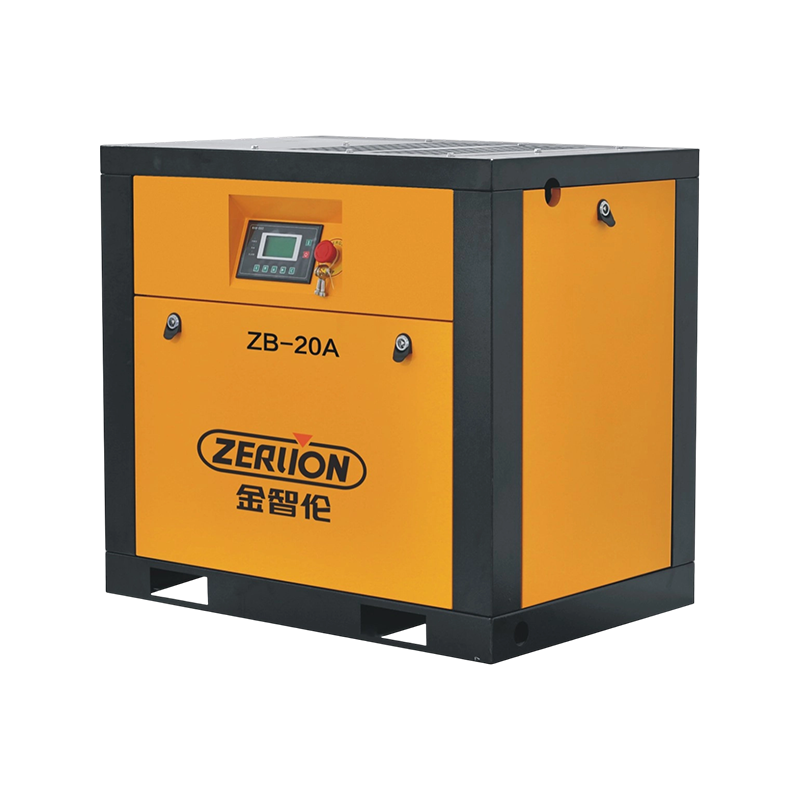
Belt-driven screw compressors play a key role in various industrial environments. Their design allows for consistent air compression while separating the motor from the compressor unit. This separation provides flexibility in placement, ensuring that machines operate efficiently without being restricted to a fixed configuration.
The core principle behind these compressors involves two interlocking rotors that compress air. The belt system connects the electric motor to the rotors, allowing the motor to run at its most effective speed while the compressor handles varying air requirements. Manufacturers focus on precise alignment and tension of the belts to maintain steady operation and minimize energy loss.
Materials selection is crucial for both the belt and the mechanical components. High-strength metals reduce wear, while reinforced belts handle continuous rotational forces. This combination results in a system capable of meeting industrial airflow demands consistently. The compressor’s casing is often designed to reduce vibration, providing smoother operation for connected tools and machinery.
Designing a belt-driven screw compressor requires balancing several factors. Engineers must determine the appropriate belt length, rotor size, and motor speed to ensure the system meets air delivery requirements. CAD tools are commonly used to simulate mechanical motion, belt dynamics, and airflow patterns before physical manufacturing begins.
Rotor geometry is central to the compressor’s performance. Male and female rotors mesh to compress air gradually, providing a continuous output. Proper alignment of the belts ensures that the torque is transmitted efficiently from the motor to the rotors. Engineers often calculate the optimal belt tension and pulley diameters to minimize slippage while avoiding excessive stress on the motor.
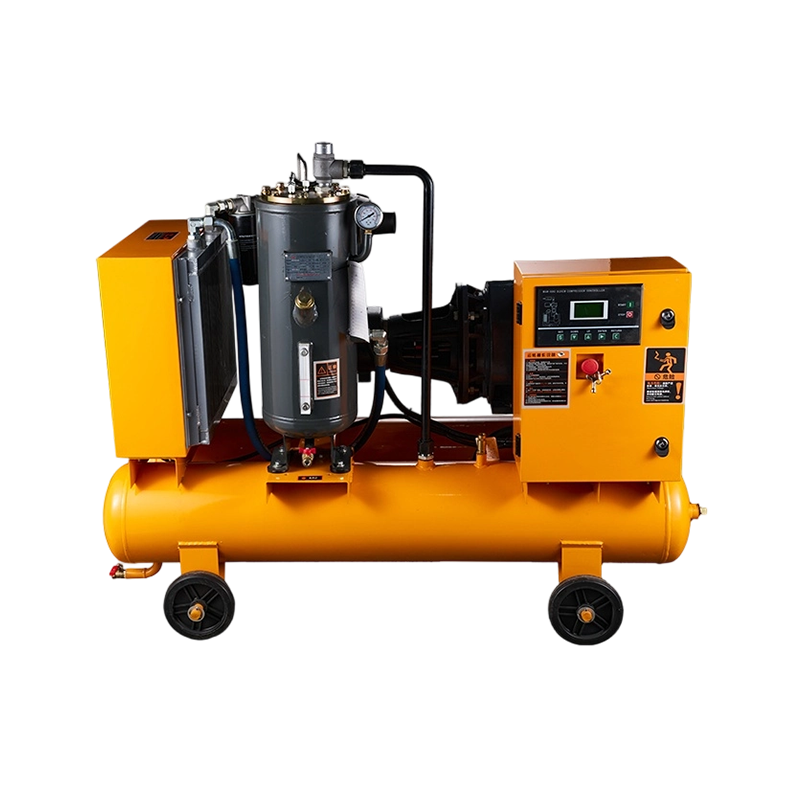
Auxiliary components such as cooling systems, lubrication channels, and air filters are carefully positioned. These elements help maintain reliable operation and support consistent air delivery. Belt-driven designs also allow for flexible motor placement, which can improve overall system accessibility. Sensors can be integrated to monitor motor and rotor performance, ensuring that the compressor delivers stable output.
A typical manufacturing facility for belt-driven screw compressors combines automated machinery with skilled assembly. CNC machines cut rotors and other metal components with precision, while assembly stations align belts, pulleys, and the motor. The process ensures that each compressor meets specifications before it reaches industrial users.
Quality control involves rigorous testing, including pressure verification, vibration assessment, and airflow measurement. Manufacturers often operate compressors under varying conditions to confirm stable performance. Small deviations are addressed immediately to maintain the consistency of production units.
Collaboration between engineering and production teams is important. Engineers provide precise measurements, tolerances, and design updates, while assembly teams implement these specifications on the factory floor. Regular feedback loops ensure that any design refinements are quickly integrated into the production process.
Belt-driven screw compressors serve a wide range of industries. In manufacturing plants, they power pneumatic tools, robotic systems, and conveyor systems. Food processing and chemical production facilities also rely on these compressors for consistent air supply. The versatility of belt-driven designs allows them to support various operational needs without compromising performance.
Manufacturers produce compressors in different capacities to match industrial requirements. Smaller units may serve individual workstations, while larger compressors support extensive production lines. Despite variations in size, the fundamental design—rotor interaction, belt transmission, and motor separation—remains consistent.
 View More
 View More
 View More
 View More
 View More
 View More
 +86-576-8262 1313
 +86-576-8262 1216
 +86-13867656789
 +86-13867656789
Xiayun Village, Hengjie Town, Luqiao District, Taizhou City Zhejiang Province, China

Copyright © Zhejiang Zhilun Mechanical & Electrical Co., Ltd. All Rights Reserved.
Air Compressor Factory

 English
 русский
 Français
 Español
 Português
