
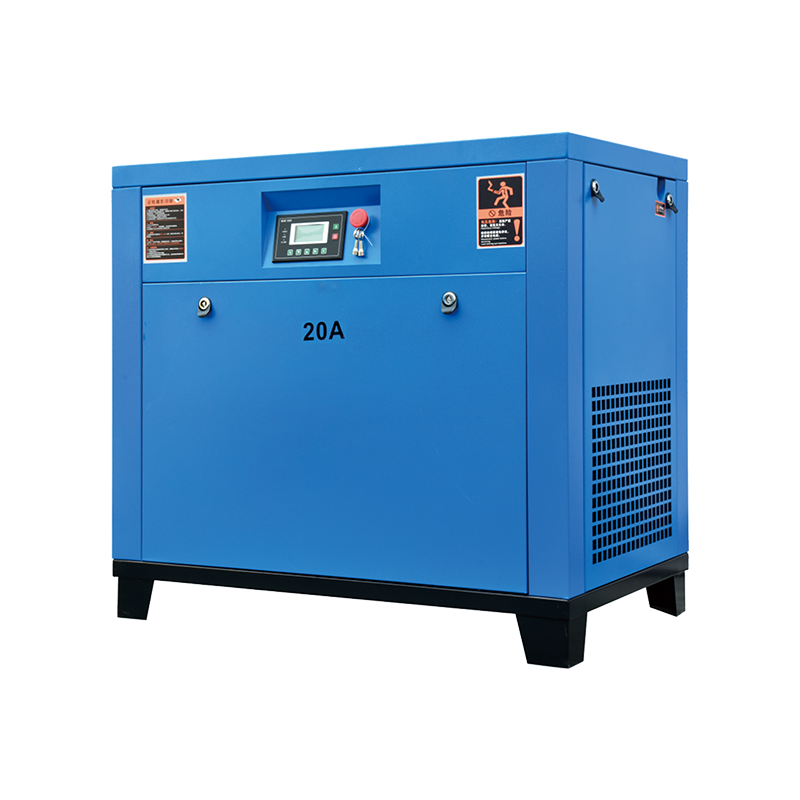
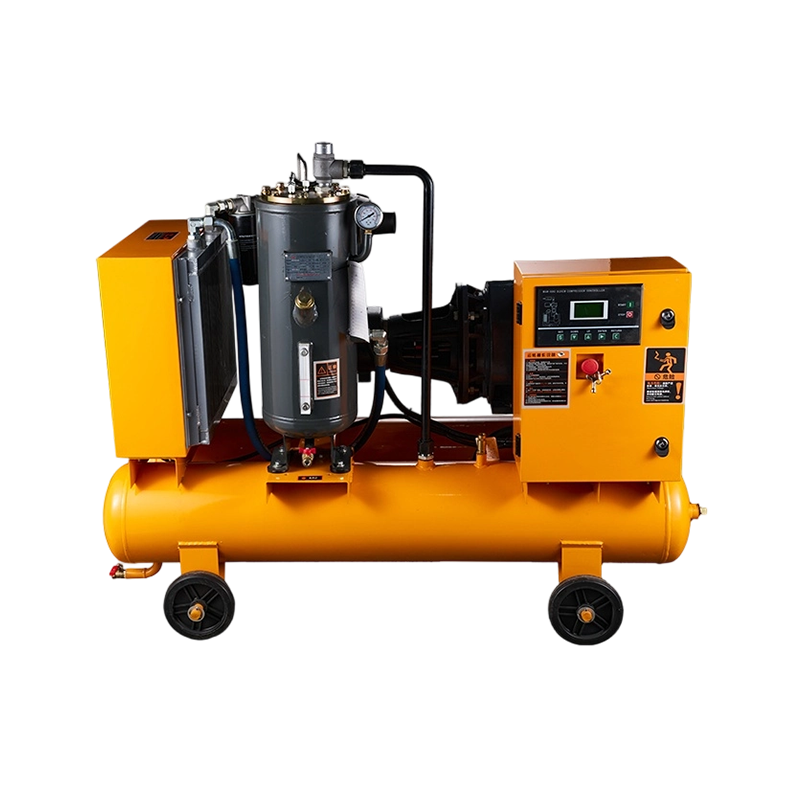
Belt-driven screw compressors operate with two interlocking rotors that draw in air and reduce its volume as the screws turn. The belt drive links the electric motor to the compressor shaft, allowing the system to run at selected speeds. This setup provides flexibility in matching motor output to compressor demands through different pulley ratios.
Air enters through intake filters before compression. The process generates heat, which cooling systems manage through built-in fans or external exchangers. The resulting compressed air moves to storage tanks or distribution lines for use in tools and processes. The belt arrangement allows for straightforward speed adjustments in many installations.
Manufacturing plants employ belt-driven screw compressors to power pneumatic tools, assembly lines, and material handling equipment. The continuous air flow supports operations such as spraying, clamping, and packaging machinery. In automotive workshops, these units run impact wrenches and paint booths where consistent pressure matters for quality results.
Food processing facilities use them for conveying systems and packaging equipment. Textile mills rely on compressed air for looms and cleaning processes. The compressors fit into production layouts where air demand varies during different shifts or product runs.
Smaller workshops often place belt-driven screw compressors in dedicated rooms or corners to reduce noise exposure. Larger industrial sites connect multiple units to central air networks with piping that reaches various workstations. The belt drive configuration allows positioning the motor and compressor element for convenient access during routine checks.
Vibration dampening mounts help stabilize the equipment during operation. Facilities arrange intake and exhaust paths to manage temperature around the units. This placement supports efficient air delivery while keeping the equipment aligned with overall plant flow.
The belt drive in these screw compressors uses multiple V-belts or toothed belts to transmit power reliably. Tensioning mechanisms maintain proper alignment between pulleys as components settle over time. This design permits changes in motor size or compressor capacity by adjusting pulley diameters without full system replacement.
Compressor elements feature precision-machined screws housed in durable casings. Oil injection in many models aids sealing and cooling during compression. The combination of belt flexibility and screw technology allows operation across a range of pressures and flow rates common in industrial air needs.
Facilities with fluctuating air usage benefit from belt-driven screw compressors that can adjust through motor controls or multiple unit sequencing. Some setups include load-unload cycles that match output to real-time requirements. This approach helps maintain system pressure without constant full-speed running.
In operations with both continuous and intermittent tools, the compressors deliver air to receivers that buffer demand spikes. The belt connection supports smooth starts and stops, reducing electrical strain on the motor during cycling. Users in different industries note steady performance during typical daily schedules.
Belt-driven models offer certain installation advantages in spaces where direct coupling might require more rigid alignment. The belts absorb minor misalignments and reduce transmission of motor vibrations to the compressor head. This characteristic suits facilities with existing foundations or retrofit projects.
Gear-driven or direct-drive alternatives exist for other applications, but belt versions remain widespread due to their serviceability and adaptability. The design allows facilities to standardize on certain motor types across different compressor sizes through pulley selection.
 View More
 View More
 View More
 View More
 View More
 View More
 +86-576-8262 1313
 +86-576-8262 1216
 +86-13867656789
 +86-13867656789
Xiayun Village, Hengjie Town, Luqiao District, Taizhou City Zhejiang Province, China

Copyright © Zhejiang Zhilun Mechanical & Electrical Co., Ltd. All Rights Reserved.
Air Compressor Factory

 English
 русский
 Français
 Español
 Português
