
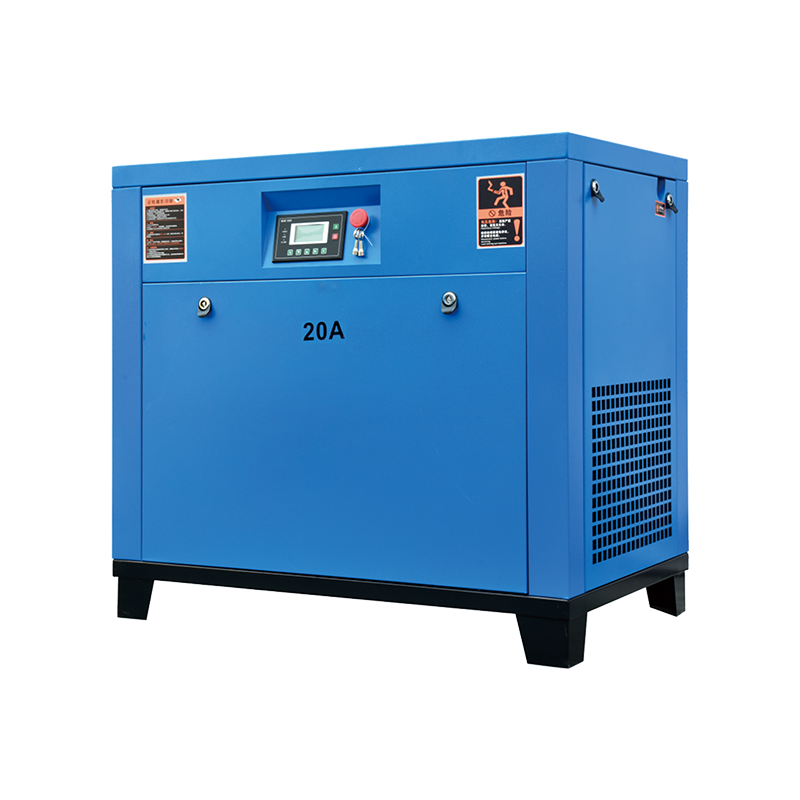
Laser cutting works on flat or sheet material, using a focused beam to cut precise shapes out of metal stock — steel, stainless steel, or aluminum, depending on the component. In a Laser-Cut Screw Compressor build, that process applies to parts like the outer housing panels, mounting brackets, ventilation grilles, control panel cutouts, and structural frame elements that hold the compressor package together.
The rotor bores and rotor profiles themselves require a different manufacturing approach entirely, since those surfaces need three-dimensional precision that a flat-cutting process can't produce. Laser cutting handles the surrounding architecture — the parts that need clean, repeatable edges and accurate hole placement, but not the complex curved geometry of the rotors.
It's tempting to think of the housing and enclosure as secondary to the rotor pair, but fit accuracy across the whole assembly affects more than appearance. A few practical reasons laser-cut precision matters here:
Laser cutting delivers that consistency more reliably than older stamping or manual cutting methods, particularly for medium-volume production runs where dozens or hundreds of identical housing sets need to come out the same way every time.
Housing and enclosure components for screw compressors are typically cut from a few material categories, each suited to different operating environments:
| Material | Typical Use | Notable Trait |
| Mild steel | General industrial housings | Cost-effective, good structural strength |
| Stainless steel | Food processing, corrosive environments | Resists rust and chemical exposure |
| Aluminum | Lightweight panels, mobile units | Lower weight, decent thermal conductivity |
The material chosen affects how the laser cutting parameters get set — thickness, cutting speed, and beam power all shift depending on whether the sheet is mild steel, stainless, or aluminum, since each responds to the cutting beam differently in terms of how cleanly the edge forms and how much heat-affected zone develops around the cut.
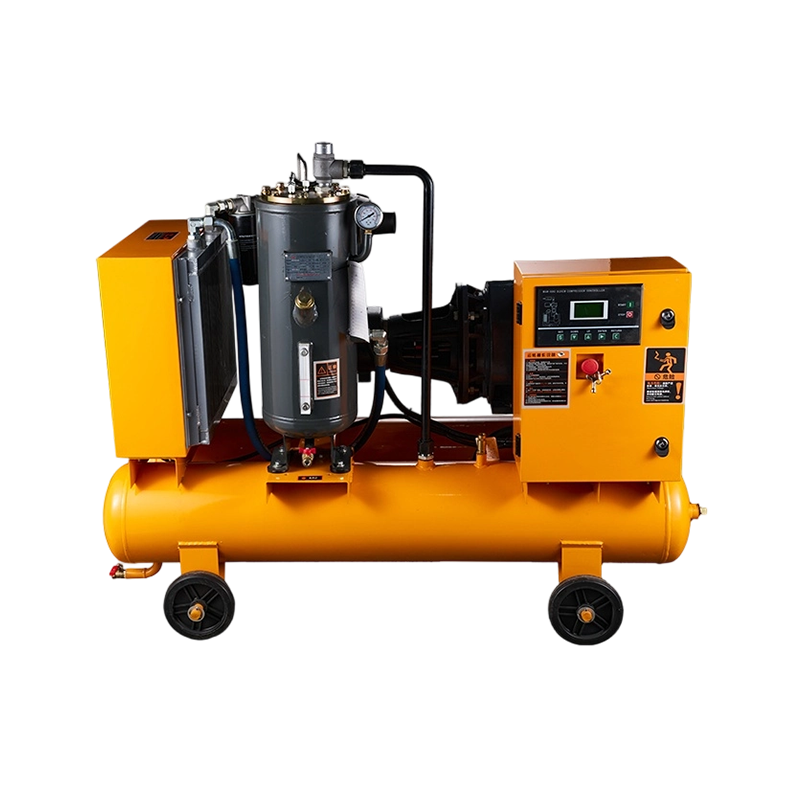
Once housing panels, brackets, and structural pieces are cut, they move to assembly, where they're welded, bolted, or fastened around the separately machined rotor pair and drive components. The laser-cut parts essentially form the skeleton and skin of the compressor package — the frame that holds everything in position, the panels that enclose moving parts, and the mounting points that secure the unit to a base or skid.
Getting the laser-cut dimensions right upfront matters here because misaligned mounting holes or slightly off panel dimensions create assembly problems downstream — components that don't sit flush, gaps that let noise or dust through, or brackets that need rework before the unit can be finished. Tight tolerances at the cutting stage reduce how much manual fitting and adjustment assembly technicians need to do later in the process.
Manufacturers and OEM partners specifying compressor packages generally work with fabricators on both fronts simultaneously — confirming rotor and core mechanical specifications from the compressor manufacturer, while separately coordinating housing and panel dimensions with a laser cutting supplier if that portion of production is handled independently. Sheet thickness, material grade, and hole pattern accuracy all get confirmed against the specific compressor model's mounting and airflow requirements before a production run begins.
For buyers building laser-cut screw compressors at scale, this two-track approach — precision-machined rotor components paired with laser-cut structural and enclosure parts — is fairly standard across the industry, since each process is suited to a different part of the machine, and combining them lets manufacturers hit both mechanical performance targets and consistent housing fit across a full production batch.
 View More
 View More
 View More
 View More
 View More
 View More
 +86-576-8262 1313
 +86-576-8262 1216
 +86-13867656789
 +86-13867656789
Xiayun Village, Hengjie Town, Luqiao District, Taizhou City Zhejiang Province, China

Copyright © Zhejiang Zhilun Mechanical & Electrical Co., Ltd. All Rights Reserved.
Air Compressor Factory

 English
 русский
 Français
 Español
 Português
