
Small portable screw compressors are available in diesel-powered, electric-powered, and dual-power configurations — and the choice of power source shapes where and how a unit can realistically be deployed.
Diesel-driven units are the standard for remote and off-grid work. They carry their own energy supply, start in cold weather without drama, and run for extended shifts on a tank of fuel. For construction sites, road works, pipeline projects, and any application where grid power isn't available, diesel is the default for good reason.
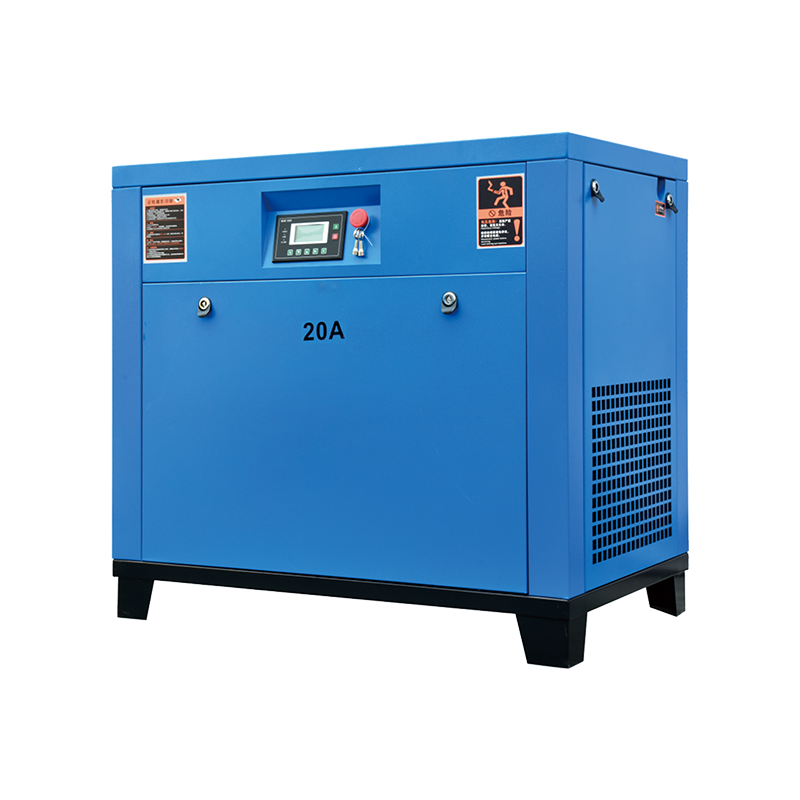
Electric-powered portable screw compressors are a different proposition. They need access to a power supply, which limits deployment flexibility — but in workshop environments, covered yards, or sites with temporary power provisions, they run without exhaust emissions and tend to be quieter in operation. For indoor or enclosed-space applications where diesel exhaust is a genuine concern, the electric option removes a practical problem entirely.
Dual-power units — capable of running on either diesel or electric supply depending on what's available on site — add flexibility at the cost of additional weight and mechanical complexity. For contractors who move between site types regularly, that flexibility can justify the trade-off.
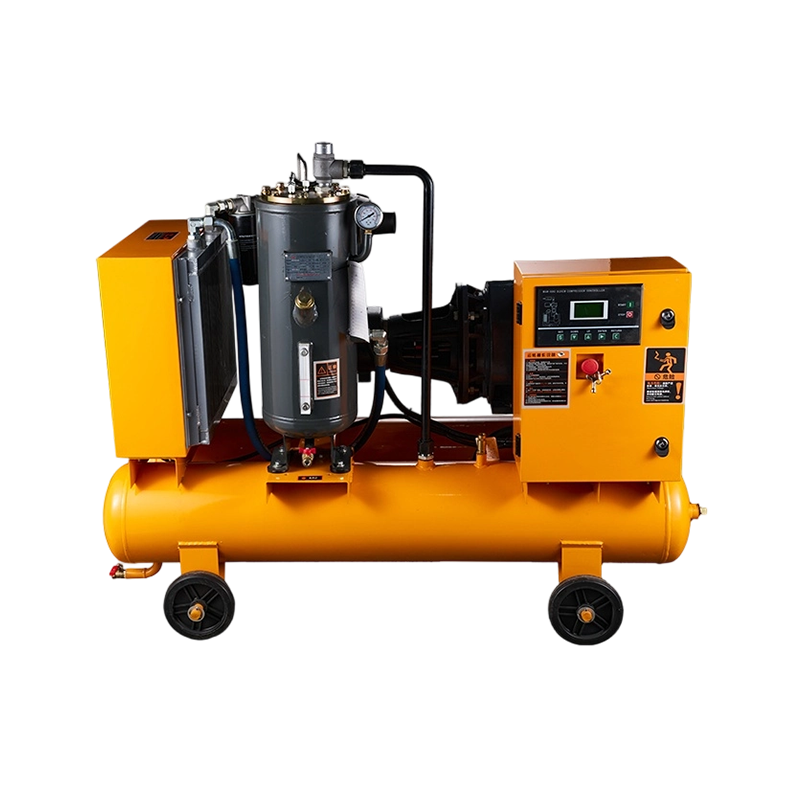
Road construction and repair crews are among the clearest use cases. Pneumatic breakers, clay spades, and paving tools all need continuous air supply, and the job moves — which means the compressor moves with it. A towable small portable screw compressor on a two-wheel chassis follows the crew along the road rather than forcing the work to come back to a fixed point.
Pipeline and utility work presents similar requirements. Sandblasting for pipe surface preparation, pneumatic wrenches for flange assembly, and air lances for trench cleaning all draw from a shared compressed air supply that needs to travel to wherever the active section of the project is located.
Mining and quarrying applications — surface operations in particular — use portable screw compressors for rock drilling, where the demands on continuous air delivery are significant and the sites are rarely close to grid infrastructure. The ability to drive or tow a compressor directly to the face of a working area is not a convenience. It's a functional requirement.
Smaller-scale applications also exist: tyre inflation rigs, spray painting operations, general pneumatic tool use at temporary sites. In these cases, the screw compressor's quieter and smoother operation compared to a piston unit can make a tangible difference, particularly in noise-sensitive or residential-adjacent work zones.
Size and weight define transport practicality. Small portable screw compressors in the field-use category typically range from around 300 kg for the lightest skid-mounted units up to around 800 kg for trailer-mounted diesel models at the upper end of this class. Towing capacity, vehicle compatibility, and site access all factor into which physical format actually works for a given operation.
Altitude is worth considering for diesel-powered units working at elevation. Engine power output drops with altitude, which reduces the compressor's effective delivery — sometimes significantly. Units intended for high-altitude deployment should be specified with this in mind, and some manufacturers offer altitude-compensated configurations for this reason.
Noise output matters in regulated environments. Small portable screw compressors vary in their sound ratings, and urban or residential job sites often have noise restrictions that limit what can legally operate during certain hours. Checking the dB(A) rating of a unit against the site's applicable limits before mobilisation avoids a problem that's difficult to solve after the equipment is already on site.
 View More
 View More
 View More
 View More
 View More
 View More
 +86-576-8262 1313
 +86-576-8262 1216
 +86-13867656789
 +86-13867656789
Xiayun Village, Hengjie Town, Luqiao District, Taizhou City Zhejiang Province, China

Copyright © Zhejiang Zhilun Mechanical & Electrical Co., Ltd. All Rights Reserved.
Air Compressor Factory

 English
 русский
 Français
 Español
 Português
