
The "VSD" in the name stands for variable speed drive, a control system that adjusts motor speed in real time based on how much compressed air the plant is actually using at that moment. Rather than running at a fixed speed and cycling on and off, the motor speeds up or slows down continuously, matching output to demand more closely than a fixed-speed unit typically manages.
"PM" refers to the permanent magnet motor built into the compressor. Unlike standard induction motors, a permanent magnet motor holds a consistent level of efficiency across a wider range of speeds, including the lower-speed range where a VSD system spends a lot of its operating time. Pairing VSD control with a PM motor is part of why a VSD PM Split-Design Screw Air Compressor tends to hold steady output even as demand shifts throughout a shift or a production cycle.
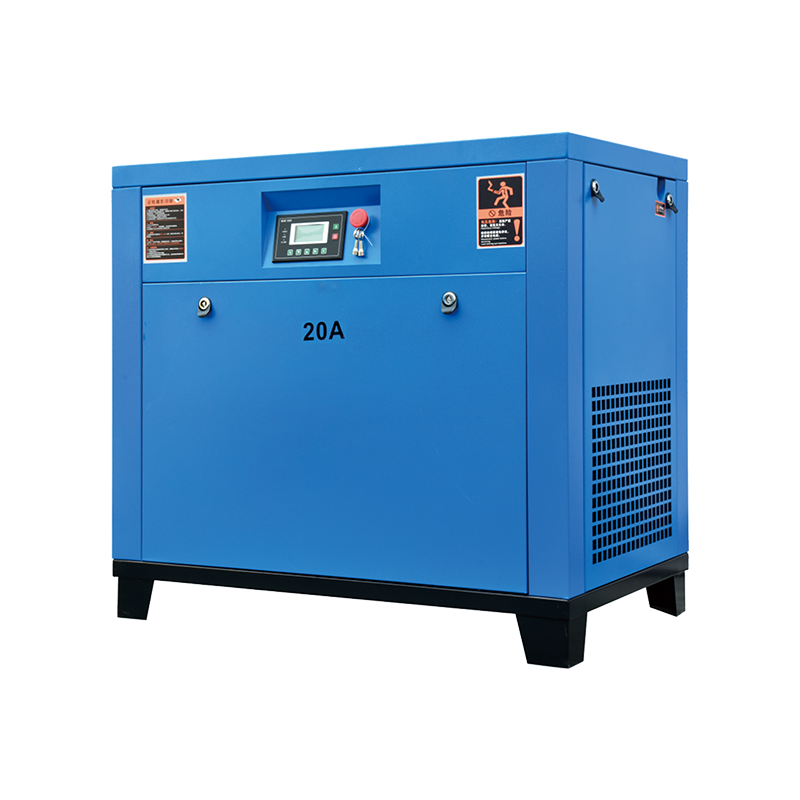
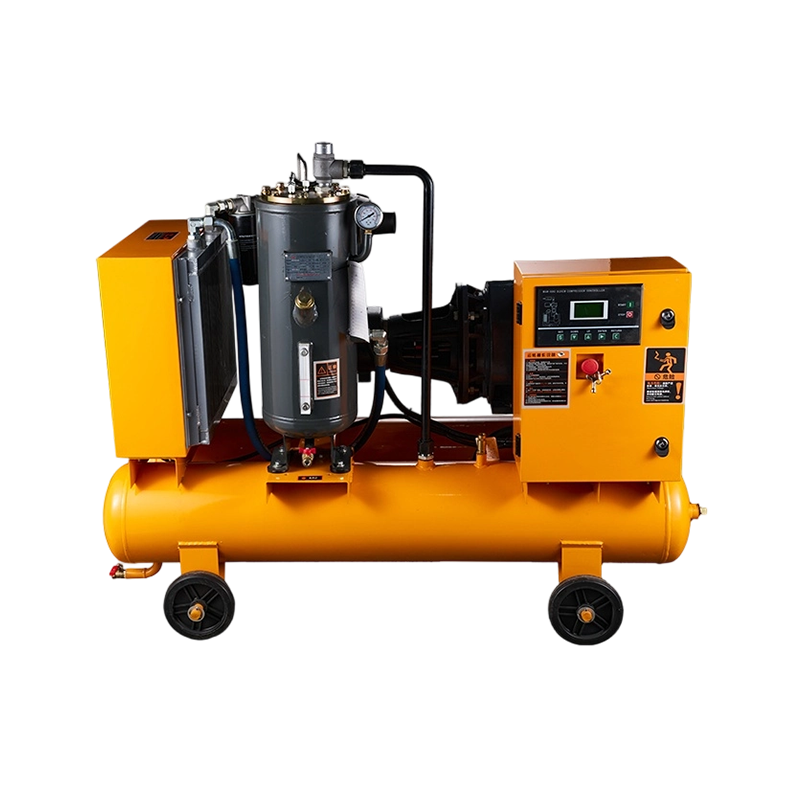
The "split-design" part of the name refers to how the motor and the compression airend are arranged. In a split-design layout, the motor and airend sit as separate, connected components rather than being fused into a single integrated housing. This separation gives technicians more direct access to each part individually, which can simplify component swaps without needing to disturb the entire assembly.
Split-design construction also tends to distribute weight and vibration differently than integrated builds. Because the motor and airend aren't sharing a single shaft housing, some vibration that would otherwise transfer directly between components gets absorbed at the connection point instead. That structural choice is one of several reasons manufacturers configure a VSD PM Split-Design Screw Air Compressor this way rather than combining motor and airend into one sealed unit.
Compressor rooms are rarely quiet spaces, but the noise profile of different compressor types varies more than people expect. Because a VSD PM Split-Design Screw Air Compressor rarely runs at full speed continuously, average noise output over a shift tends to sit lower than a fixed-speed unit cycling between full load and full stop.
The split-design layout contributes here as well. With the motor and airend connected rather than fused, vibration transfer between the two components is somewhat dampened at the connection interface. Facilities placing compressors near office spaces or quality-control areas sometimes factor this into equipment selection, since lower ambient noise reduces the need for additional soundproofing around the compressor enclosure.
A few settings where a VSD PM Split-Design Screw Air Compressor shows up regularly:
These settings share a common trait: demand that shifts throughout the day rather than staying constant. In operations where air usage barely changes hour to hour, a fixed-speed compressor can sometimes handle the load just as effectively, but wherever demand varies, the adjustable nature of a VSD PM Split-Design Screw Air Compressor tends to align more closely with actual usage patterns.
Integrated screw compressors, where motor and airend share a single housing, remain common across the industry and work well in many applications. The tradeoff shows up mainly in serviceability and vibration handling rather than raw output capability. An integrated unit is generally more compact, while a split-design unit trades some of that compactness for easier component access.
For buyers comparing options, the decision often comes down to floor space versus servicing convenience. A VSD PM Split-Design Screw Air Compressor takes up a bit more room on the shop floor, but the separated layout can make individual component work more straightforward when the time comes to inspect or replace a specific part.
 View More
 View More
 View More
 View More
 View More
 View More
 +86-576-8262 1313
 +86-576-8262 1216
 +86-13867656789
 +86-13867656789
Xiayun Village, Hengjie Town, Luqiao District, Taizhou City Zhejiang Province, China

Copyright © Zhejiang Zhilun Mechanical & Electrical Co., Ltd. All Rights Reserved.
Air Compressor Factory

 English
 русский
 Français
 Español
 Português
