
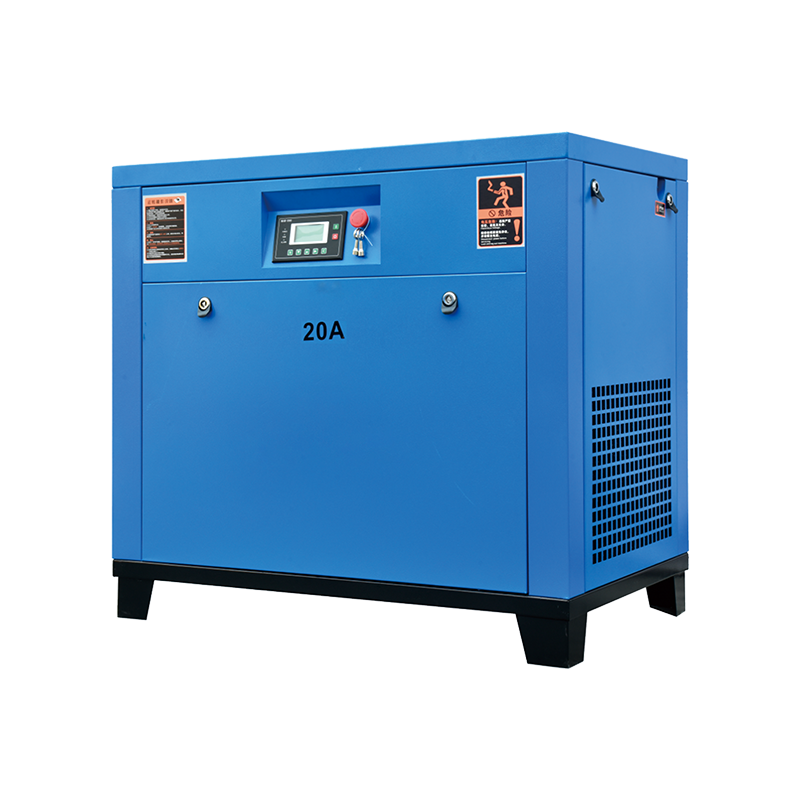
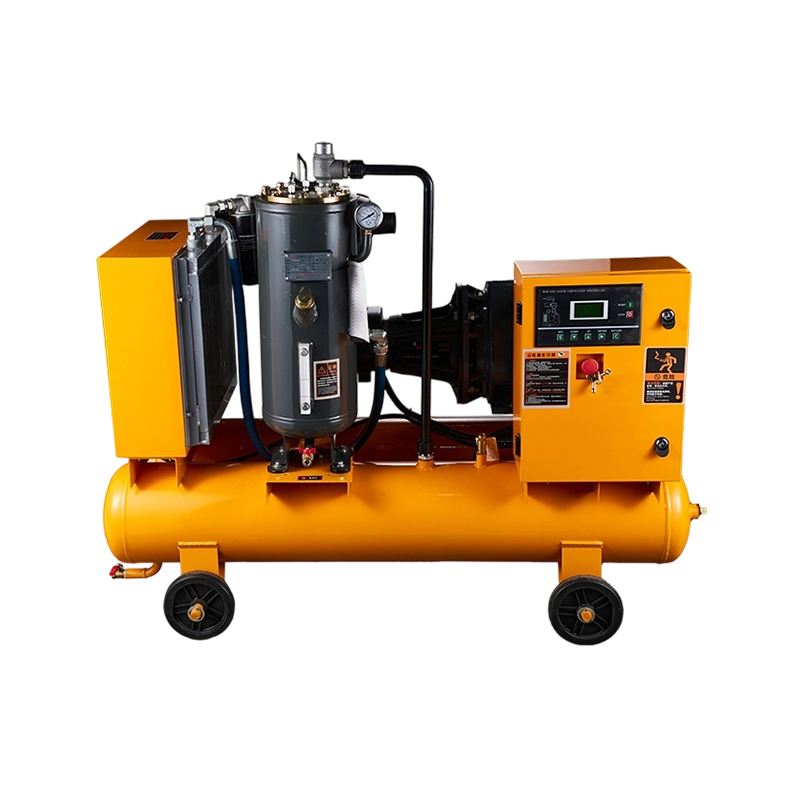
Low-Pressure Screw Air Compressor units supply compressed air at reduced pressure levels suited to many continuous industrial processes. These machines use intermeshing rotors to compress air efficiently within a defined low-pressure range. Buyers evaluating compressed-air systems for production lines often examine how the design, construction, and operating characteristics support steady air delivery without excess energy use.
A Low-Pressure Screw Air Compressor relies on a pair of precisely matched helical rotors that rotate within a tight housing. As the rotors turn, air is drawn in, trapped in the interlobe spaces, and progressively reduced in volume. The low-pressure design optimizes rotor profiles and clearances for delivery pressures typically below those of standard industrial compressors.
Housing materials, bearing arrangements, and shaft seals are selected to maintain alignment and minimize internal leakage under continuous operation. The air-end geometry is calculated so that the compression process remains smooth and the discharge temperature stays within manageable limits for the intended duty. This fundamental layout forms the basis for reliable low-pressure air supply.
Manufacturing begins with high-precision machining of the male and female rotors. Specialized grinding and milling equipment produce the complex helical profiles to tight tolerances. Rotor surfaces may receive coatings that reduce friction and wear during continuous contact.
The air-end housing is cast or fabricated and then finish-machined to match the rotor set. Assembly takes place under controlled conditions to ensure correct clearances and alignment. After the air end is completed, it is integrated with the motor, cooling system, and control package. Each stage of production focuses on dimensional accuracy so that the finished machine delivers consistent volume and pressure.
A Low-Pressure Screw Air Compressor delivers a steady flow of air at the target pressure with relatively low pulsation. The continuous rotary action produces a smooth output that suits processes sensitive to pressure fluctuations. Capacity control methods, such as variable speed or inlet modulation, allow the unit to match changing air demand without frequent start-stop cycles.
Heat management is built into the design through oil or air cooling circuits that keep operating temperatures stable. The overall package is arranged for straightforward integration into existing plant air networks. These functional traits support uninterrupted production where a reliable low-pressure air source is required.
Packaging lines use Low-Pressure Screw Air Compressor systems to power pneumatic actuators, sorting equipment, and product-handling devices. Textile and nonwoven production relies on them for fiber transport and web handling. Food and beverage facilities apply the units for conveying, bottling, and packaging steps that operate at moderate pressures.
In general manufacturing, these compressors supply air for tools, clamps, and light-duty pneumatic cylinders. Material-handling systems that move bulk solids through pipes also benefit from the steady low-pressure flow. In each case the compressor becomes part of a larger process rather than a standalone utility.
Pipework diameter, filtration, and drying requirements downstream of the compressor affect overall system performance. The physical footprint and access for routine checks influence placement within the plant. Noise levels and vibration characteristics may also enter the evaluation for installations near work areas.
Understanding the complete air-system layout—including receivers, distribution lines, and point-of-use equipment—helps ensure the Low-Pressure Screw Air Compressor operates within its intended envelope. These technical considerations turn a general compressor model into a working element of a specific industrial process.
 View More
 View More
 View More
 View More
 View More
 View More
 +86-576-8262 1313
 +86-576-8262 1216
 +86-13867656789
 +86-13867656789
Xiayun Village, Hengjie Town, Luqiao District, Taizhou City Zhejiang Province, China

Copyright © Zhejiang Zhilun Mechanical & Electrical Co., Ltd. All Rights Reserved.
Air Compressor Factory

 English
 русский
 Français
 Español
 Português

